




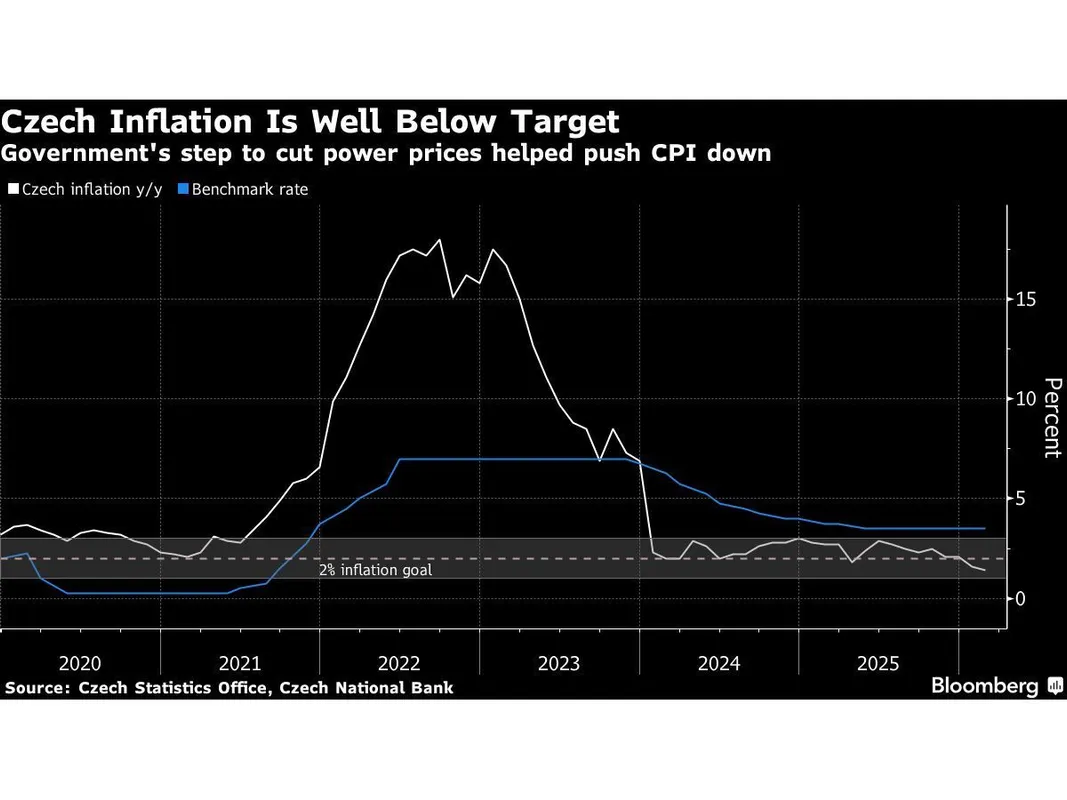

Jan Kubicek, a member of the Czech central bank board, asserts that the bank can endure a global oil price spike without hiking interest rates. Headline inflation remains well below core measures, providing a substantial buffer against elevated fuel costs.
Assessing the Oil Shock
The Middle East conflict has driven oil prices beyond earlier forecasts, though longer-term futures have risen modestly, signaling a short-lived disruption. Kubicek noted, “For now, this is leading me to believe that the impact on inflation will be transitory.” He expressed satisfaction with current rates ahead of the March 19 policy decision.
Even as fuel prices climb, overall inflation stays comfortably within the 1%-3% target range. Central banks worldwide grapple with surging energy costs, which threaten both price stability and growth.
Focus on Second-Round Effects
Governing Council member Peter Kazimir indicated that the conflict could prompt the European Central Bank to tighten policy earlier than expected. Kubicek prioritizes potential spillovers from energy prices into transportation and industry, but currently sees minimal risk of such effects materializing.
US-Israeli strikes on Iran have unsettled global markets, sparking volatility in Czech interbank rates. Investors shifted from anticipating cuts to pricing in multiple hikes, a reaction Kubicek deemed excessive.
Market Volatility and Currency Resilience
Rate expectations eased after comments from US President Donald Trump suggesting the conflict might resolve soon, stabilizing at a single quarter-point rise over the next year. The Czech koruna has outperformed regional currencies, gaining 0.1% against the euro despite initial pressures, faring better than the Hungarian forint’s 2.7% drop.
The benchmark rate holds at 3.5% following a May reduction. Policymakers previously eyed further easing before the conflict erupted.
Economic Signals Support Steady Policy
Board members largely dismiss one-off government cuts to electricity prices. While low headline inflation might suggest restrictiveness to some, Kubicek points to robust consumer loans, mortgages, and corporate lending as evidence that 3.5% suits the economy. Recent data revealed stronger household spending and investments than anticipated.
Further easing risks overheating demand. Kubicek added, “The real economy is signaling to me that the level of 3.5% isn’t restrictive.”
Future cuts hinge on a sharp external demand shock or declining core inflation, which lingered at 2.7% in February. “There still isn’t a clear trend toward 2% in core inflation, so I don’t consider the work finished yet,” Kubicek stated.

