



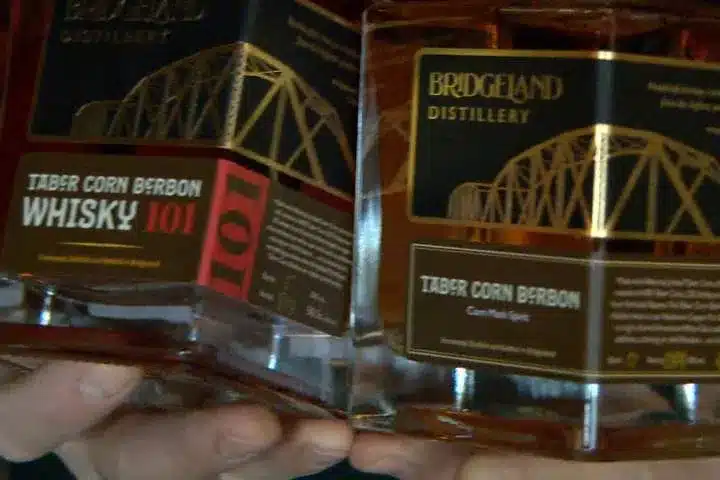

Bridgeland Distillery in Calgary must remove select award-winning spirits from store shelves following directives from the Canadian Food Inspection Agency (CFIA).
Product Lineup and Sales Impact
The distillery, in operation for seven years, crafts popular brandies and whiskies. Standouts include Berbon, a corn mash spirit, and a Taber corn-based spirit aged just one year—too short for legal whisky classification, which requires three years. These products drive about 50% of sales.
Triggering Complaint and Initial Inspection
CFIA inspectors arrived on June 27, 2025, after an unidentified complainant raised concerns about the spirits. They scrutinized Berbon, spelled B-E-R-B-O-N, questioning potential customer confusion with bourbon.
“They indicated that we were trying to mislead our customers into thinking it was a bourbon,” stated Daniel Plenzik, co-owner. “We disagree because bourbon whiskey, spelled B-O-U-R-B-O-N, cannot appear on a bottle. Our spelling ties to Taber, Alberta—source of our corn—plus barley and wheat from Penhold.”
Escalation and Removal Order
Inspectors revisited in July, seeking details and forecasting a September update. Silence followed until February 4, 2026, when CFIA officials phoned, recited the report, and mandated shelf removal until compliance issues resolve.
No health risks surfaced, per Jacques Tremblay, the other co-owner. “We explained our rationale for the spelling,” he noted. “The word B-O-U-R-B-O-N does not appear on the label.”
Plenzik clarified: “Bourbon lacks geographical ties like champagne or cognac—you can’t alter those spellings. Bourbon originates anywhere in the U.S., provided B-O-U-R-B-O-N stays off the label.”
The team updated social media to address concerns but left bottle labels intact, as sales occur under the Berbon name. Resolution remains pending.
CFIA Response
The CFIA confirmed: “A complaint regarding Bridgeland Distillery products prompted an investigation to check compliance and distilled beverage standards. The agency collaborates with the company on findings and next actions.”
Plenzik called it “a misinterpretation of the rules,” lamenting absent dialogue and a process presuming guilt without proof of innocence.

