




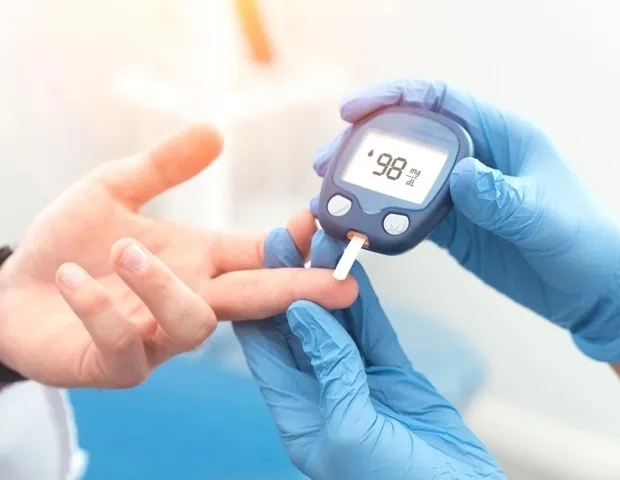

Researchers at Washington State University have created a wearable biosensor that promises to transform wireless glucose monitoring for diabetes patients. This innovative device offers greater accuracy, affordability, and minimal invasiveness compared to existing continuous glucose monitors.
Advanced Microneedle Technology
The sensor employs tiny hollow microneedles and advanced detectors to analyze sugar levels in interstitial fluid surrounding cells. It delivers real-time data wirelessly to a smartphone, enabling seamless tracking. “We amplified the signal using a novel single-atom catalyst, resulting in smaller, smarter, and more sensitive sensors,” states Annie Du, research professor in WSU’s College of Pharmacy and Pharmaceutical Sciences. “This technology lays the groundwork for detecting other disease biomarkers.”
Traditional monitors often involve inserting needles under the skin, leading to irritation, rashes, or insufficient sensitivity. In contrast, this 3D-printed sensor activates via a button-operated pump to draw fluid from just below the skin surface for external analysis, reducing pain and toxicity risks.
Superior Sensitivity and Comfort
“Our design proves far gentler for users,” notes Kaiyan Qiu, Berry Assistant Professor in WSU’s School of Mechanical and Materials Engineering. The microneedles measure less than a millimeter long—much shorter than standard needles—ensuring a painless, minimally invasive experience. “These hollow microneedles represent next-generation medical tools,” Qiu adds.
Enhanced detection stems from single-atom catalysts and enzymatic nanozymes, which boost signal strength to identify even trace biomarker levels. “Nanozymes significantly amplify our signals, enabling detection of minimal biomarker quantities,” Qiu explains.
Commercial Potential and Next Steps
The team has secured a provisional patent and plans animal trials, with explorations into multi-biomarker applications. The U.S. continuous glucose monitor market projects growth from $7.2 billion in 2024 to $26.8 billion by 2033.
“My aim is to integrate cutting-edge sensing into daily healthcare,” says Yonghao Fu, co-first author and PhD student in mechanical and materials engineering. “Combining technologies leverages their best features.” Funding comes from the National Science Foundation and Centers for Disease Control and Prevention.

