




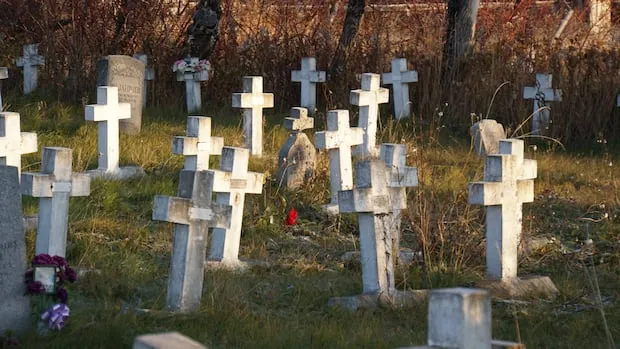

In Sudbury cemeteries, funeral director Collin Bourgeois occasionally leads burial services attended solely by his funeral home colleagues. In some cases, the deceased remains unnamed, prompting staff to refer to them as a ‘child of God.’
“We just say ‘child of God,'” Bourgeois explained after 47 years as a funeral director in northern Ontario. “There’s always words of kindness that can be spoken.”
Rising Numbers of Unclaimed Remains
These ceremonies honor human remains unclaimed by family or friends, a trend accelerating across the province. Ontario recorded 1,700 such cases last year, a threefold increase from six years prior. In northeastern Ontario, instances rose to 42 in 2025 from zero in 2019.
The provincial coroner’s office coordinates with local municipalities, which partner with funeral homes to ensure dignified burials under the Anatomy Act.
Reasons Behind Family Estrangement
At Simple Wishes for the North in Sudbury, Bourgeois notes frequent efforts to locate next of kin, though many decline. “There’s a history, there’s a story. And we try to get to the bottom of that,” he said. “A lot of pain, a lot of hurt, a lot of suffering. And the families don’t want to get back into that, so it’s just easier for them… to stand back and say, ‘Sorry, he is my brother, he is my son. But I can’t do anything for him at this point.'”
Bourgeois links the surge to growing issues like addiction, mental health challenges, homelessness, and family breakdowns. “Comes as no surprise. It’s almost expected,” he observed. “Some people would rather be alone than be in a community or be in a family… If you live alone, chances are you die alone.”
Chief Coroner’s Perspective
Dr. Dirk Huyer, Chief Coroner of Ontario and General Inspector of Anatomy, avoids the term ‘unclaimed bodies.’ “It’s just dehumanizing,” he stated. “It doesn’t recognize that this is a deceased person who had a life, who had friends. And that’s where we take our role very seriously, because we want to ensure that we provide the most respectful and timely way to be the final voice for those people.”
Office data reveals most non-claiming relatives cite financial constraints, though cases vary. “It’s not typically someone who is precariously housed or underhoused,” Huyer clarified. “The most common circumstance is a person who, for a variety of reasons, doesn’t have any family or friends who are directly associated with them. It may be because of estrangement, it might be because of personal choices, or it might be an older person who has outlived their other family members.”
Staff acknowledge the uptick but view their efforts as ‘sadly reactive,’ with no clear policy fixes in sight.

