




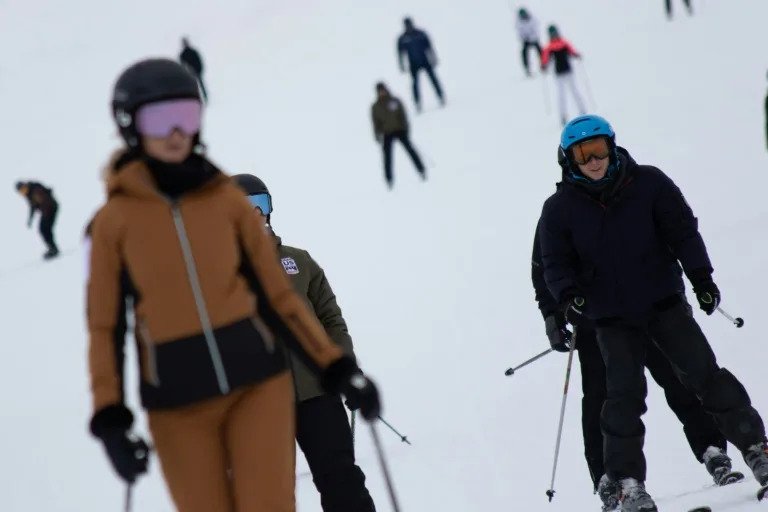

Buses from Naples roll in steadily, depositing thousands of visitors in vibrant ski gear into the quaint mountain town of Roccaraso in central Italy. Each winter weekend, the streets buzz with day-trippers, and the modest slopes teem with locals from Naples eager for snowy adventures and crisp mountain air.
“We don’t ski, but we have fun with sleds. Sometimes I even try with a plastic bag under my bottom!” laughed Anna Lippolis, a 58-year-old hairdresser sporting a retro pink ski jacket and silver earrings. She boarded the 30-euro return bus from Naples on a recent Sunday to escape routine and relax after a demanding week.
Away from Italy’s premier destinations hosting the Winter Olympics this season, many residents enjoy winter sports at accessible spots like Roccaraso. However, the influx of visitors has strained relations with locals, highlighting the challenges mountain areas face in handling growing crowds amid shrinking natural snowfall.
Crowd Management Challenges
The sole ski slope reachable on foot from Roccaraso, at 1,200 meters elevation, remains closed and now serves as a play area for children. Visitors can ride the chairlift for panoramic views, then hike, sled, or descend via lift.
“It’s my son’s first time seeing snow,” said Raimundo Di Bello, 68, while waiting in the half-hour lift queue. “It’s just lovely to be in the mountains.”
A short 10-minute drive leads to Alto Sangro, a full-fledged resort with over 100 kilometers of slopes reaching 2,100 meters, attracting 500,000 visitors annually. There, avid skiers voice frustration over day-trippers who prioritize lounging and sipping spritz cocktails amid blaring music from nearby speakers.
“People who don’t ski come and ruin the environment, nature, and the concept of sport here,” said Kikka Misso Gentile, a 41-year-old from Naples with a vacation home in nearby Rivisondoli.
Tensions escalated last year when over 250 buses brought 12,000 to 13,000 people in a single day, spurred by a social media influencer’s call for Neapolitans to visit. Officials responded by capping bus arrivals at 50 on a recent Sunday and stationing wardens to oversee the crowds.
Nicola Pitucci, a 46-year-old electrician with property in Roccaraso, noted a surge in visitors in recent years alongside erratic snow patterns. “Everyone has the right to have fun in the snow,” he said, “but limiting the number is right because the town can’t accommodate 50,000 people. It has no facilities, no infrastructure.”
Rising Costs and Declining Snow
Many day-trippers explain they skip skiing due to its high cost—often 200 euros per person daily, including transport, rentals, and passes. While more affordable than in France or Switzerland, ski pass prices have climbed up to 10 percent in some areas, according to consumer advocates.
Despite these hurdles, the sector shows resilience, with Italy achieving record seasons in 2022-23 and 2023-24. Climate change, however, continues to reduce snow cover, shortening seasons across European resorts. Over 90 percent of Italy’s slopes rely on artificial snow production, and Roccaraso operates the nation’s largest system.
“Artificial snow is not a solution; it’s a stop-gap,” and it will grow harder to maintain as temperatures rise, said Antonio Montani, president of the Italian Alpine Club. He advocates for diversification, pointing out that lower-elevation sites like Roccaraso suit activities such as hiking and cycling better than high Alpine areas.
“The mountains in the Apennines are beautiful; they’re still wild, and at the same time, they’re very rich in history, culture, and art,” Montani added.
Unique Winter Adventures
For thrill-seekers, Sicily offers a distinctive option: skiing on an active volcano. Mount Etna draws global tourists to its surreal lunar terrain. “Lava, snow, and sea… it’s a truly unique experience,” said local guide Mirto Monaco.

