


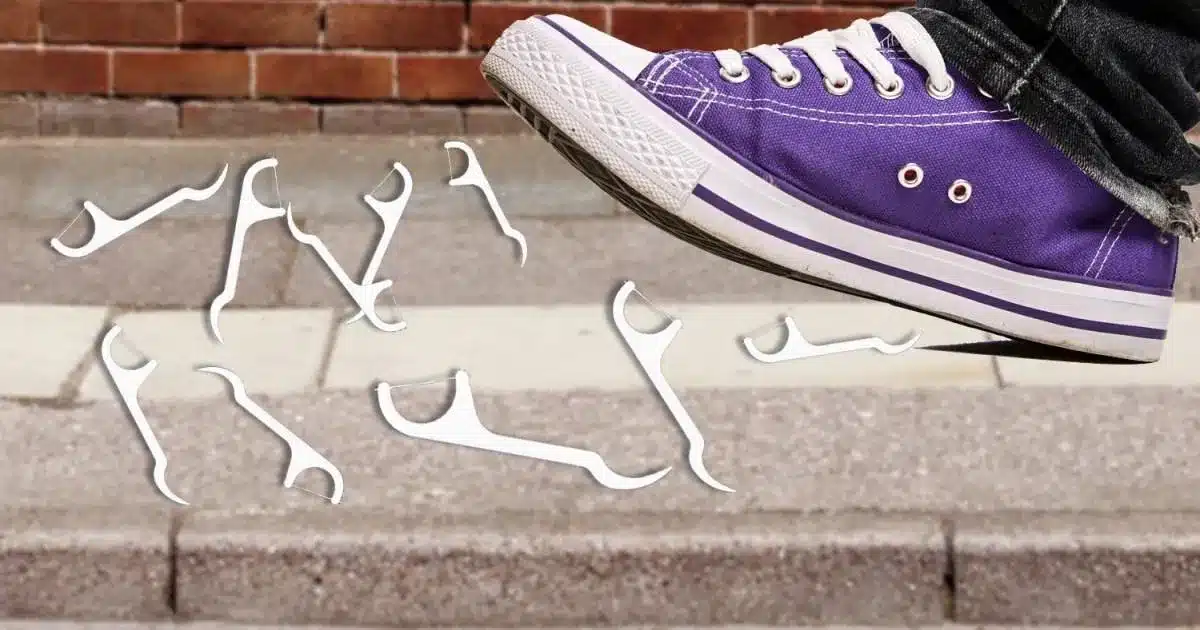

Discarded floss picks have emerged as a widespread sight on pavements across Britain, appearing in cities like London, rural areas in Kent, northern regions, and even airport terminals such as Gatwick’s South Terminal.
Public Observations and Theories
Social media users have noted a sudden increase in these Y-shaped plastic tools littering streets. One popular theory links the trend to the rise in cosmetic dental procedures, often called “Turkey teeth,” prompting more on-the-go flossing. Others suggest people pocket them after chewy meals for later use. A notable idea points to British rapper Central Cee, known for promoting oral hygiene tools like floss picks and tongue scrapers, as seen in his 2023 British Vogue interview where he revealed always carrying a tongue scraper.
Rising Awareness of Oral Health
The Marylebone Smile Clinic observes a clear uptick in patient knowledge about interdental cleaning. “Patients are more informed than ever about the importance of flossing, largely driven by social media, preventative health messaging, and a broader cultural shift towards wellness and self-care,” the clinic states.
However, data reveals limited action. A 2021 government adult oral health survey indicated only 30% of participants regularly use dental floss. In a global survey across 12 countries, 52% of Brits admitted, “I always forget to floss,” ranking alongside the French and Irish.
Popularity of Floss Picks
For those who floss, picks stand out for convenience. “They’re convenient, portable, and often perceived as easier to use than traditional string floss,” the clinic explains. “For many people, especially those who find flossing fiddly or uncomfortable, floss sticks lower the barrier to maintaining good oral hygiene. That increased accessibility likely contributes to their visibility in public spaces.”
Why They End Up on Streets
Despite growing use, these items frequently escape bins due to their sharp, tapered plastic ends designed for toothpick functionality, which pierce standard bin bags. Their small size leads to casual discarding, akin to cigarette butts, and they slip through street cleaning and recycling processes.
Dr. Oluseye Oludoye, lecturer in Environmental Science at Teesside University, highlights further challenges: “Because floss picks are small and perceived as trivial, they may also be treated less seriously than larger forms of litter.” He adds that their mixed materials—plastic handles fused with nylon floss—defy conventional recycling: “The design of floss picks makes them almost impossible to recycle through conventional systems.”
Dr. Oludoye notes this issue underscores a mismatch between convenience products and UK waste infrastructure, including bins and cleaning schedules.
Environmental Impact
Beyond aesthetics, floss picks contribute to pollution. Most consist of single-use plastics that fragment into microplastics, entering waterways and food chains. While brands like Twice Oral Wellness and DenTek explore cornstarch-based alternatives, conventional picks persist.
Sian Sutherland, co-founder of A Plastic Planet, warns: “These are products designed to support oral health, yet they’re made from plastic that breaks down into microplastics and adds to long-term chemical exposure in the environment and our bodies. Disposable floss picks show how deeply throwaway plastic has been normalised in everyday life. We take something used for a few seconds, make it from a material that lasts for decades, and then act surprised when it shows up in our streets and waterways.”

