




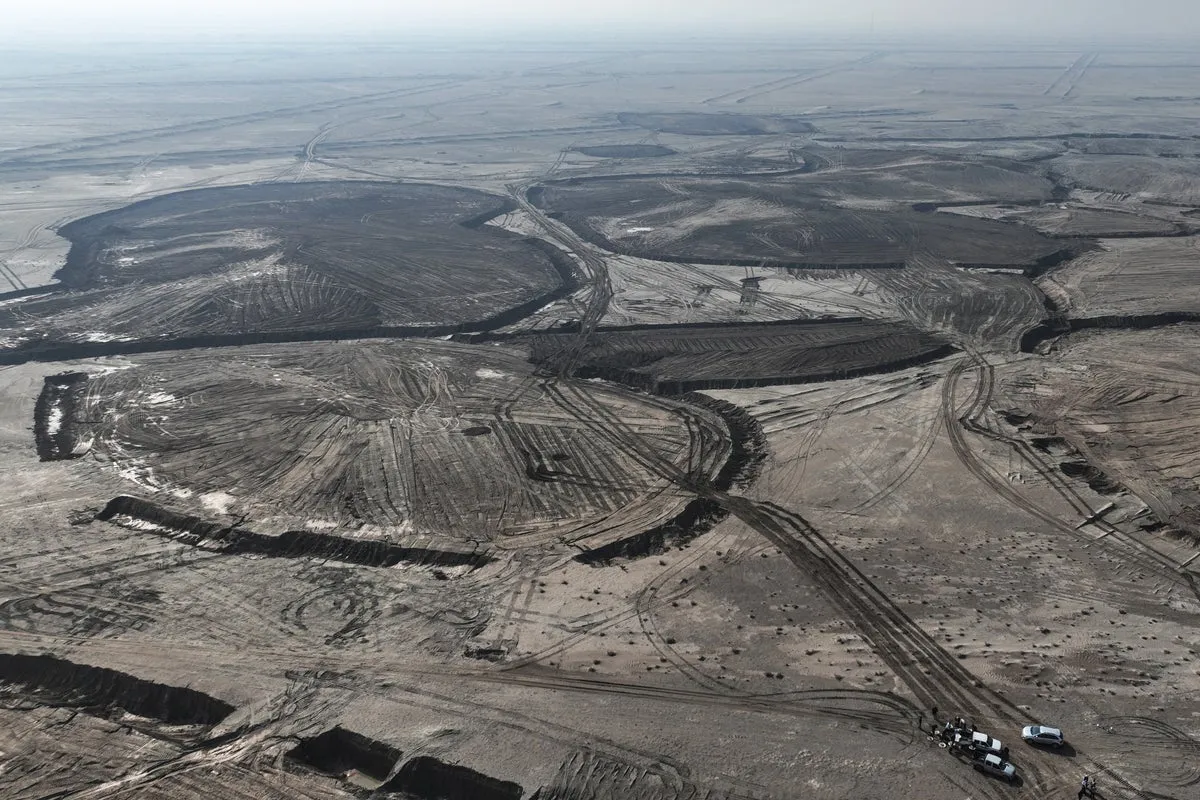

New financing strategies must address the massive funding shortfall to prevent farmland worldwide from turning to dust, warns Yasmine Fouad, executive secretary of the UN Convention to Combat Desertification (UNCCD).
Fouad, who assumed the role in 2025 after serving as Egypt’s environment minister, emphasizes that unchecked land degradation will exacerbate food crises and heighten conflict risks. “Today, there is a massive gap between the finance available and the finance required, but closing that gap cannot rely on public budgets alone,” she stated. “We need the financial sector, development banks, insurance systems, and private capital to treat healthy land as foundational infrastructure for our economies and societies.”
Staggering Funding Gap
The latest UNCCD assessment reveals that $355 billion (£261 billion) is needed annually to combat land degradation globally, yet only $77 billion is currently mobilized each year. Affected countries provide 72 percent of this funding, with 22 percent from international government aid and just 6 percent from private investments.
As aid budgets decline worldwide, urgent mechanisms are essential to attract more private capital, according to Fouad.
Understanding Land Degradation and Desertification
Land degradation involves the loss of soil quality and productivity due to erosion, deforestation, overgrazing, and fertility decline. Desertification specifically refers to persistent degradation in drylands, leading to desert-like conditions and reduced agricultural output.
Growing Crisis and Impacts
Recent UNCCD data indicates land degradation affects 15.4 percent of global land as of 2019, up 4 percent from four years prior. This equates to 100 million hectares of productive land lost annually, impacting 1.3 billion people.
Desertification, land degradation, and drought cost affected nations 2 percent of their GDP yearly—totaling $878 billion—with losses in food production, soil health, timber, and groundwater recharge.
“The risks of inaction are no longer environmental risks alone,” Fouad said. “Land degradation and drought are already contributing to food insecurity, supply chain disruptions, forced migration, rising inequality, and instability in vulnerable regions. In a deeply interconnected world, no country is insulated from these impacts. Investing in land restoration is therefore not charity. It is preventive investment in resilience, stability, and shared prosperity.”
G7 Echoes Concerns
G7 environment ministers recently labeled desertification and drought as “systemic global challenges” and “security risk multipliers” in a communique ahead of their leaders’ summit.
Promising Solutions and Projects
Fouad highlights viable restoration efforts, including watershed management in Ethiopia and Kenya, and salt-tolerant crops for farmers in Egypt’s Nile Delta.
A flagship initiative, the Great Green Wall in Africa’s Sahel region, targets planting 100 million hectares of trees in desert-prone areas by 2030. Additionally, 74 low- and middle-income countries vulnerable to drought have submitted management plans to the UNCCD, awaiting funding.
Upcoming COP17 Conference
The UNCCD’s Conference of the Parties (COP17) will convene in Ulaanbaatar, Mongolia, in August to prioritize financing for desertification combat. Fouad remains confident in its potential: “I see Cops as more important than ever, as they are critical to bringing together countries from both the Global North and Global South. The world depends on Cops in order to be able to reach the consensus that is needed to solve different global environmental challenges.”

