






Visitors entering Caledonia Regional High School in Hillsborough, roughly 25 kilometers south of Moncton, pass hallways adorned with vibrant posters and student artwork. This spring, those corridors will connect to an innovative four-season geothermal greenhouse, harnessing ground heat to sustain optimal growing conditions year-round.
Hands-On Learning Across Subjects
Principal Emily Ostler Colpitts announces the greenhouse opens in April, enabling students to cultivate diverse vegetables nearly continuously. A future “food forest” will feature raspberries, blueberries, and apples.
“I think the impact on students is going to be immeasurable,” Ostler Colpitts states. “Taking care of a living thing gives such a sense of pride and responsibility.”
The facility integrates into daily curriculum, spanning math, science, culinary technology, biology, and nutrition. Students track plant growth, mastering planting and harvesting techniques.
Partnership to Combat Food Insecurity
Ostler Colpitts conceived the project three years ago and partnered with Foods of the Fundy Valley, a non-profit dedicated to food security in Albert County. Board member Alicia O’Hara notes the initiative aligns perfectly with the organization’s mission.
Summer harvests will donate produce to local food banks, targeting Hillsborough’s vulnerabilities. “We have one grocery store in the area … and we’re a lower socioeconomic area with no [public] transportation and just less resources,” O’Hara explains.
Coordinator Megan Mace describes Albert County as a “fresh food desert” due to limited access to grocery stores. “In New Brunswick, we have a three- to four-month growing season and with this greenhouse we can extend that,” Mace says. “That dramatically increases the accessibility of fresh food.”
Student Excitement and Benefits
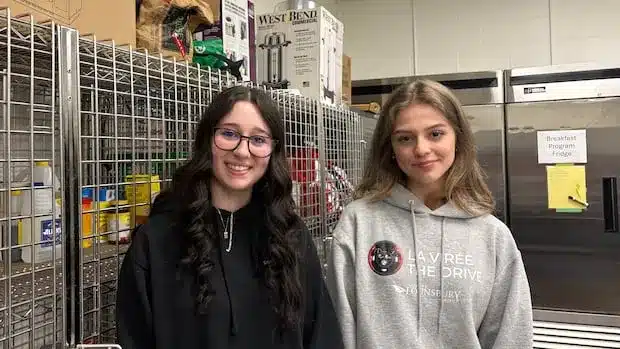
Grade 11 student Gracie-Lynn Jackman highlights benefits for low-income peers, where fresh produce costs more than packaged options. “I think it’ll be really rewarding seeing how the community is going to be helped by something we’re doing at our school,” Jackman shares.
Grade 12 student Emma Barkhouse anticipates lessons in agriculture and geothermal energy, urging teachers to maximize the opportunity.
Inspiration from Port Elgin Regional School
The project draws from Port Elgin Regional School’s 2021 winterized greenhouse. Principal Christoph Becker reports students dedicate one hour daily to seedlings, planting, and watering, maintaining journals and recording data.
“When we went to school, the academics were the ones that succeeded and those that weren’t necessarily academics felt that they didn’t belong. And this offers everybody a chance to succeed,” Becker says.
The greenhouse supplies a salad bar, reducing cafeteria expenses. Educational assistant Chris Morrison notes its role in culinary classes, producing kale bites, pickled beets, relish, and salsa—some sold at the local pharmacy.
“Children need to learn these skills,” Becker adds. “I’m super happy that other people are following suit.”

