





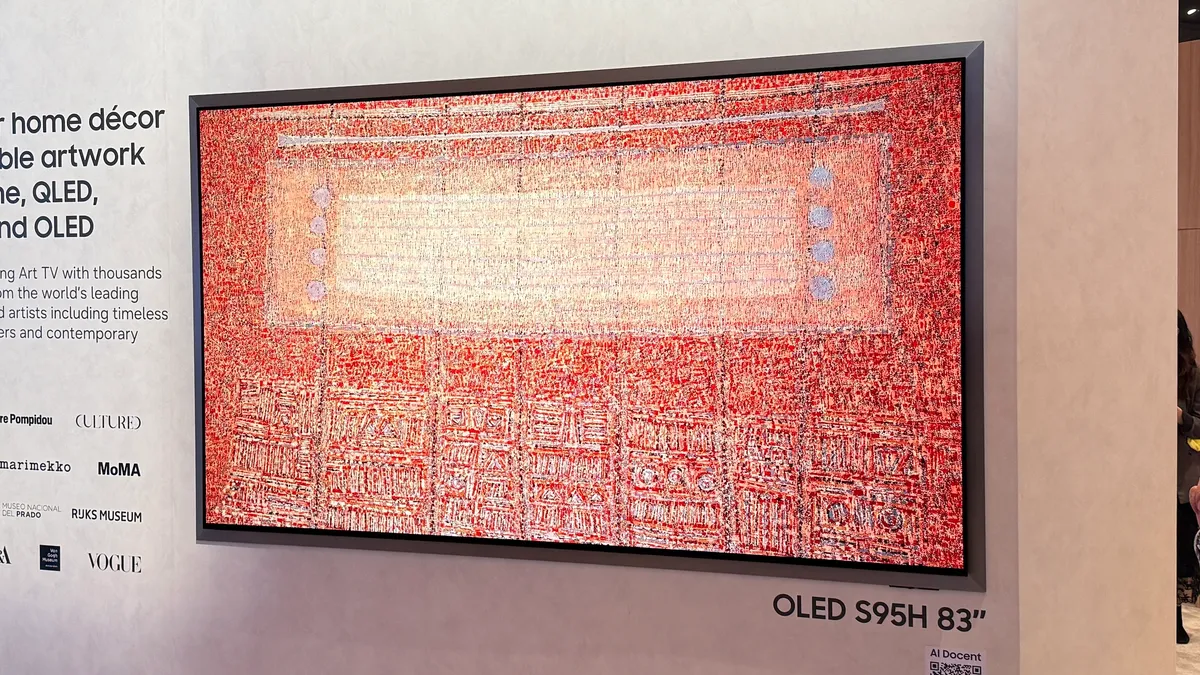

Samsung’s upcoming flagship OLED TV, the 2026 S95H, achieves a 30% brightness increase over the previous S95F model through innovative QD-OLED Penta Tandem technology. This advancement also doubles the panel’s lifespan, marking a significant step forward in display performance.
QD-OLED Penta Tandem: Five Layers for Superior Performance
The QD-OLED Penta Tandem panel stacks five blue light-emitting layers, up from four in prior models. Samsung Display employs advanced organic materials to enhance luminous efficiency. This setup boosts brightness at the same power level or sustains equivalent brightness with reduced energy use.
Samsung Display explains: “When the number of organic material layers increases, luminous efficiency improves, enabling higher brightness at the same power level or maintaining the same brightness with lower power consumption. It is similar to five people carrying a load that was previously carried by four, allowing either greater endurance or the ability to lift something heavier.”
Brightness and Longevity Gains
The five-layer structure yields 1.3 times the brightness and twice the lifespan compared to last year’s four-layer QD-OLED panels. Theoretical peak brightness reaches 4,500 nits for TVs and 1,300 nits for monitors, though real-world TV performance aligns closer to 2,750 nits based on measurements from the prior S95F.
Expansion Across Devices
Samsung Display plans to roll out QD-OLED Penta Tandem panels in various sizes throughout 2026, supplying TVs and monitors—including a 49-inch dual QHD model at 5,120 x 1,440 resolution—to multiple manufacturers.
The S95F earned recognition as the top TV of 2025 and continues to rank among the best options in 2026, setting a high benchmark for this upgrade.

