





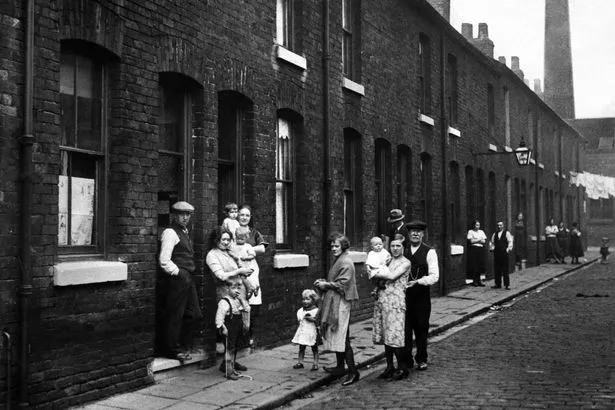

A remarkable account of a Salford man’s life during the Industrial Revolution emerges from letters preserved by his descendants. Richard Emmett, born in the 1840s into a large working-class family, navigated poverty, factory labor, and military service across Britain and abroad.
Childhood Marked by Hardship
Emmett grew up in Salford and Manchester amid economic instability. His father, a hatter by trade, faced frequent unemployment, leaving the family of eleven children struggling. Emmett began factory work at a young age without formal apprenticeship, fueling his worries about the future.
At around 16, while his parents ran the Bay Horse public house on Hope Street, Oldfield Road, in Salford, Emmett hated factory life. He wrote in his memoir: “I was then working in the factory and I did not like it, in fact, I hated it… I got tired and downhearted and determined to leave home altogether.”
Emmett left home intending to join the sea trade but enlisted in the militia and later the regular Army instead.
Military Service and Family Challenges
Emmett served over 20 years, stationed in Britain, Malta, Mauritius, and India. He married a Maltese woman named Mary, raising a family despite military rules, separations, illnesses, and constant moves.
During a furlough from Newcastle-on-Tyne, he returned to Salford only to learn his mother had died. He recalled: “My poor mother was dead, and I was not there to see her before she died… I spent many happy hours amongst them, also my money too.”
After service, Emmett settled in Crewe, where he died in 1906 and received an unmarked grave in Crewe Cemetery.
A Rare Personal Record
Emmett documented his experiences in the 1880s memoir A Small History of My Life to My Children, detailing hunger, labor, service, and family life. On his impoverished youth, he stated: “My parents being but very poor people, besides having a very large family to rear and bring up. There was eleven of us altogether… My father was a hatter by trade, and the hatting business getting very slack, he fell out of work… I shall remember to my last day there was me and two other brothers and two sisters and poor mother struggling and starving for six long weary months.”
No original handwritten pages or photographs survive; a family member typed the text in the early 20th century, keeping it private for generations.
Working-class autobiographies from Victorian Britain, especially from ordinary soldiers, remain scarce. Historian Antony David Davies, who edited a second edition, emphasizes: “Emmett’s account is valuable because it is not mediated by later institutions or official record-keeping: it shows what a working-class man chose to remember and how he chose to explain his life to his children.”
Davies adds that the memoir provides a “from below” view of 19th-century Salford and Manchester, factory pressures, Army life as a path to stability, and the unrecorded struggles of military families. “In short, Emmett’s memoir is unusual not because its author was famous, but because he was ordinary, and because he left behind a sustained, first-person record of a life that would otherwise be known only through census lines and service papers.”
The second edition of A Small History of My Life to My Children, edited by Antony David Davies, is available in Kindle and paperback on Amazon.

