



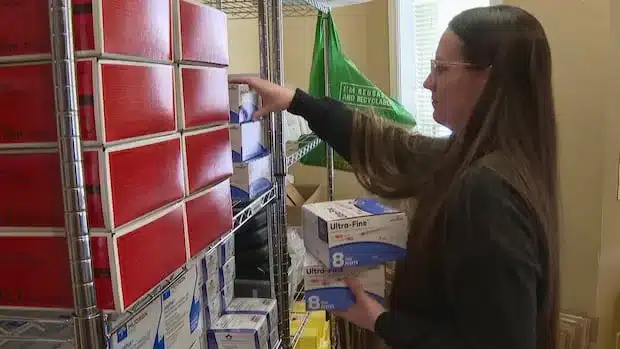

In St. John’s, Sarah Torraville’s office features a wall stocked with medical-grade supplies, including syringes, alcohol swabs, naloxone kits, test strips, and glass pipes. She packs these items into boxes, seals them, and prepares them for mailing. Torraville has coordinated such distributions for years to reduce risks associated with unregulated street drugs.
“I just really care about making sure they can be as safe as they can,” Torraville said of the individuals she supports. Sterile needles help prevent HIV and Hepatitis C transmission. Naloxone kits can reverse overdoses, while test strips detect fentanyl or benzodiazepines in substances like cocaine.
The Safe Works Access Program (SWAP) mails these supplies directly to homes across Newfoundland and Labrador, available to anyone who uses drugs—not limited to pharmacies or partner sites.
“A lot of people depend on us for safe supplies, especially in small communities,” Torraville noted.
Innovative Approach for Rural Areas
Gillian Kolla, a harm reduction researcher and assistant professor at Memorial University with a doctorate in public health sciences, praises SWAP’s mailing system as groundbreaking.
“That’s a model the rest of the country can learn from, because many areas fail to address rural and remote communities effectively,” Kolla said.
While major cities experiment with supervised consumption sites—some expanding, others closing—this approach suits densely populated areas like Vancouver but not spread-out regions like St. John’s or Gander. In Newfoundland and Labrador, rural spots lie far from urban services. Mailing supplies closes this gap and combats stigma in tight-knit towns.
“A discrete package delivered to the door makes it accessible without public visibility,” Torraville explained.
Newfoundland and Labrador recorded 71 accidental overdose deaths in 2024, according to the chief medical examiner. Nationally, overdoses claimed 7,146 lives that year. Kolla urges swift action.
“Overdose deaths are rising here, so well-resourced harm reduction and evidence-based treatments must expand now to avert a crisis,” she said.
Broader Impact and Access
Safe supplies cut overdose risks and ease health system pressures by preventing infections and diseases.
“Reusing personal supplies can still cause infections,” Torraville warned.
Rural recipients often order in bulk to share safely within communities, ensuring single-use needles and avoiding reuse damage. SWAP collaborates with numerous pharmacies, organizations, and offices province-wide for distribution.
Staff like Torraville build trust, serving as entry points to recovery services, rehab, or reduction support.
“We are often the only ones they feel safe confiding in about drug use, free of judgment,” she said.
Demand for these supplies continues to grow, keeping users safer amid rising needs.

