





Generational conflict is commonplace in history but now increasingly consequential. Many younger Americans believe things are getting worse, and some blame the boomers who came before them. Former private equity executive Bruce Gibney, now 50 and a Gen Xer, labeled boomers “a generation of sociopaths” who have left behind a burden of enormous government debt.
The angst among millennials, born between 1981 and 1996, as well as older members of Generation Z, reflects a labor market that is less than robust. It clearly takes younger people far more time to achieve the markers of adulthood such as buying a house, getting married and starting a family or even such traditional markers as getting a driver’s license or dating. They tend to be highly alienated not only from the older generations but also from one another.
California, once seen as a center of youth culture, is now becoming overwhelmed by a gray tsunami. Since 2020, notes demographer Wendell Cox, the percentage of the state’s population made up of people under 25 has dropped far faster than nationwide, while the percentage of older boomers outpaces the nation by as much as 10 points. There are already more people over 65 than in the critical 25- to 34-year-old cohort. By 2060, the state’s median age is projected to be over 45. In 1970, it was more like 28.
Older California boomers, roughly those born between 1946 and 1955, are clearly doing, on the whole, better than younger generations. But are they to blame for young people’s dim prospects? And did the boomers have it easy by comparison?
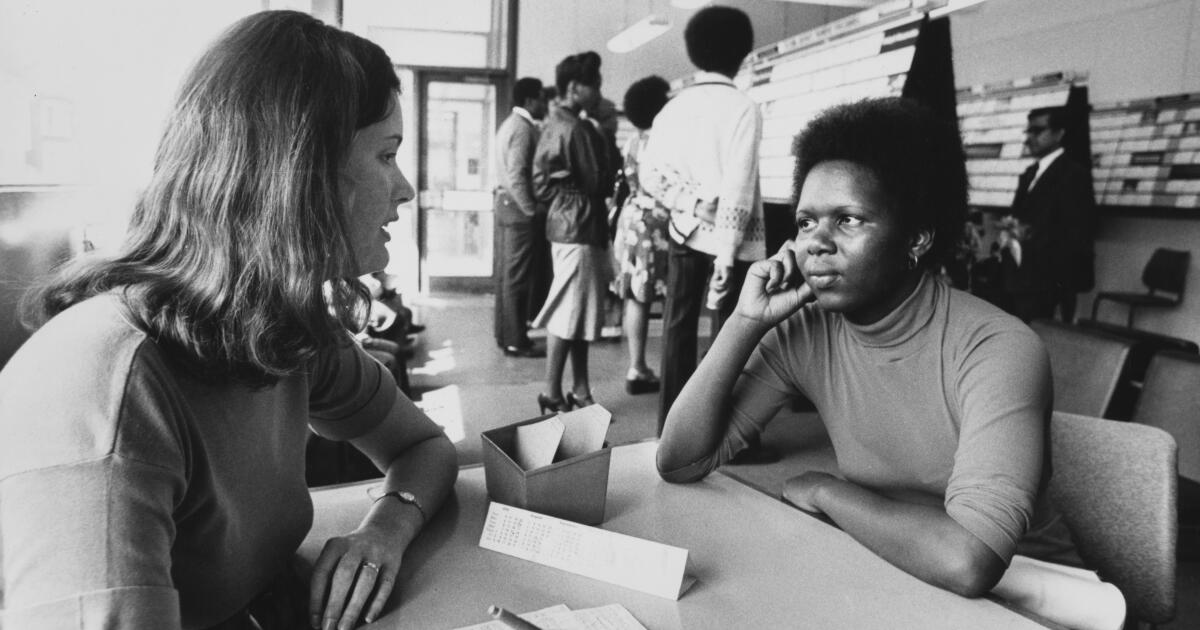
Boomers also faced tough economic challenges. The economy they entered in the 1970s was unraveling as productivity dropped. Young people then confronted far higher unemployment rates, nearing 10% by 1980, driven in part by high numbers of new entrants to the labor force.
Inflation in the 1970s also reached nearly four times that of 2025 (2.7%). The collapse of manufacturing devastated much of the Northeast and particularly the Midwestern industrial heartland. In California, the shrinking of the aerospace industry took away many high-paying jobs.
Of course, the prospects of the current generation also are far from rosy. As California’s economy has evolved, higher-wage-job growth has been among the slowest in the nation. Today our state stands well below the national average when it comes to creating jobs that pay well, while it is at the top of the heap in creating below-average and low-paying jobs.
But if the current younger generations face fewer headwinds from either unemployment or inflation, they still, notably in California, face difficult prospects. Even the better educated worry about artificial intelligence that is making the job market tougher for graduates. Hit hardest are those professionals on the “soft” side of the economy: finance, accounting, law, code writers.
Rather than blame the boomers, perhaps young adults need to do as the boomers did: Get real and work harder. Right now millennials are not impressing employers, notes the Harvard Business Review. Even the students know the score: More than half (53%) of recent college graduates feel unqualified for an entry-level job in their field, with nearly half (42%) admitting they did not have all the skills listed in the job description. A recent survey of more than 1,000 employers found that millennials and Zs had the worst work ethic of any generation, more concerned with their lifestyle and leisure than their careers.
The boomers had to up their game when they were young. Many made the often-painful decision to leave their homes in the industrial Midwest or “Bonfire of the Vanities”-era New York. They also gained the analytic skills that helped them get ahead in the growing information and business-service economy. After all, this was the generation that drove the emergence of Silicon Valley.
Like the boomers, the next generation also needs to up its act, but in ways that make sense in today’s conditions. One difference: A college degree is no longer a meal ticket. Now, as nearly 40% of the workforce under 40 has a four-year college degree, far higher than in 1970, a diploma means much less.
Of course, some college degrees are still worth more than the paper on which they are printed. People with training in the professions — notably in medical fields as well as technology and engineering — remain in high demand. By contrast, the humanities have lost 25% of their students since 2012.
In contrast to the ’70s, today’s economy is drifting toward one in which skills applied to the physical world matter more, including fields such as mechanical engineering, aeronautics, geology and robotics. Many young people are seeking careers in the trades. As college enrollment dropped between 2020 and 2023, trade schools grew by 10% amid an ever-growing shortage of industrial and craft workers. One recent survey found that 83% of Gen Z feel that learning a skilled trade can be a better pathway to economic security than college — including 90% of those already holding college degrees.
Moving and adjusting to economic changes is critical for any generation, as has been the case since the republic’s earliest days. This is most obvious in the case of housing, which has been a windfall for us boomers. The average longtime homeowner in California made $265,000 selling their home, compared with barely $100,000 nationally. Along with Gen Xers, they have home ownership rates similar to those in the rest of the country.
But between 1980 and 2020, the share of California 25- to 35-year-old homeowners declined from 39.4 to just 15.5%. One study found that while 20% of people under 35 own their own homes in places like Sioux Falls, S.D., an emerging tech center, only 3.5% of their counterparts in San Jose can make the same claim. The over-inflated housing prices are a key reason Californians under 35, those likely to start families and companies, are precisely the group deserting the West Coast because of cost of living.
Making changes in career or locale is tough. Some want the older generation to subsidize high-priced urban lifestyles for young adults. We saw this in New York’s recent mayoral election, in which socialist Zohran Mamdani promised to keep down rents, build new housing and lavishly subsidize such things as transit and childcare. In California, where the far left is also ascendant, we already see similar proposals to tax the older affluent population, as epitomized by the new wealth tax proposal. This after years of steady rises in other taxes. If passed, the wealth tax could become a template for confiscation of assets of less exalted boomers’ assets.
If boomers want to stop the drive toward mass redistribution, they need to realize the value in creating more favorable conditions for advancement for our state’s younger generations. That means everything from reviving good blue-collar industries to scaling back regulations that make it difficult to build affordable, and family-friendly, housing. Without such changes, boomers inevitably will face a generational war over their assets, one they will likely lose.
Joel Kotkin is the presidential fellow for urban futures at Chapman University and senior research fellow at the Civitas Institute at the University of Texas, Austin. Substack: @jkotkin

