



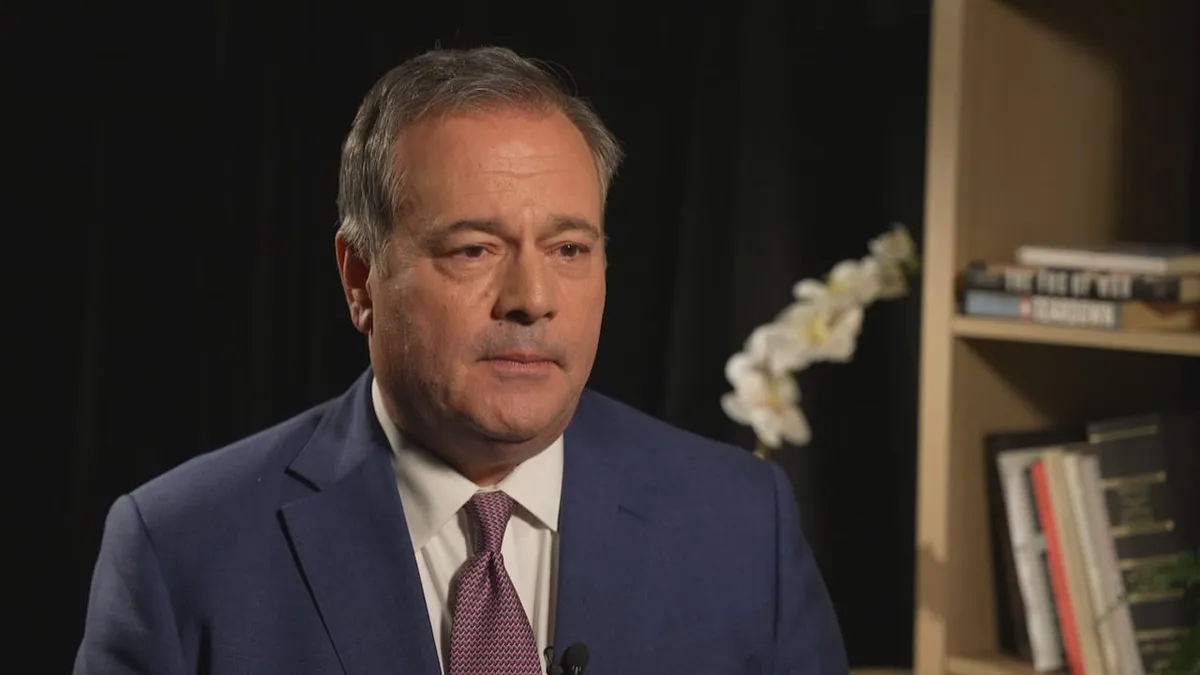

Former Alberta Premier Jason Kenney believes separatists intentionally publicized his personal information during an online meeting, describing it as no accident amid a major voter data breach.
The Exposure Incident
Kenney’s concerns arise from a meeting last month hosted by the Centurion Project, a pro-separatist group under scrutiny for a massive breach of voter data. A video obtained by the Alberta NDP shows Kenney’s name being searched and his private details displayed on screen in front of supporters and some United Conservative Party staff.
“Out of five million people in Alberta, they chose me to publicize my personal information in the most explicit way. That wasn’t by accident. It’s borderline incitement,” Kenney stated.
Alberta NDP Leader Naheed Nenshi personally informed Kenney about the incident. “It’s just not pleasant… people knowing my personal information, where I live and so forth,” Kenney added, noting past threats he has received.
Voter Data Breach Details
The Centurion Project, registered as a third-party advertiser in Alberta, previously posted a database containing personal details of nearly three million voters. A judge ordered its removal last week. Elections Alberta traces the list to the Republican Party of Alberta, a pro-independence group, though its path to the Centurion Project remains unclear.
The RCMP and Alberta’s privacy commissioner are investigating. In a statement, the Centurion Project explained it used a third-party dataset for a tool designed to train volunteers on political engagement. Organizer David Parker also links to Take Back Alberta, which pushed for Kenney’s 2022 ouster from the United Conservative Party leadership.
Kenney’s Security Measures
Kenney expressed alarm upon hearing of the breach. “I immediately thought, this can’t be good for me, because some of the more over-caffeinated people in the separatist movement are the kinds of people who’ve been making fairly frequent threats against me,” he said.
He now takes extra security precautions and considers civil action. “I’ve got a thick skin, but it is concerning. I’ve got people threatening that I will be executed following the Nuremberg trials for my crimes against humanity. These are people who are not well, and I think most of them are probably harmless, but all it takes is one person to go too far.”
Separatism Push and Federalist Response
Groups like Stay Free Alberta collect signatures for an independence referendum petition. Kenney acknowledges grievances but firmly supports Alberta remaining in Canada. “I think we can expect to see a gelling of the pro-Canada side in this debate in the weeks to come,” he predicted.
A recent poll reveals 27 percent of Albertans favor separation, steady from 28 percent the previous year. Academics, including University of Alberta political science professor Feo Snagovsky, urge a public inquiry via an open letter signed by dozens. “I think if we have an independence referendum in October without a public inquiry, people will justifiably question the legitimacy of that election outcome,” Snagovsky said.
Kenney remains skeptical of inquiries, preferring RCMP results, especially with a potential October referendum looming. A spokesperson for Justice Minister Mickey Amery stated the ministry awaits investigation outcomes before further comment.
UCP’s Future Challenges
Stay Free Alberta submitted its petition to Elections Alberta, though verification pauses amid a court case. Organizers, led by Mitch Sylvestre, aim to influence the premier’s party. “The premier can put this to a ballot regardless of what happens with Elections Alberta, and that’s why you would want to join the UCP,” Sylvestre said.
Kenney worries for the United Conservative Party he co-founded in 2017. “These are folks who have always been at the margins of Alberta politics, never able to get more than one or two per cent of the vote provincially, who are trying to take over apparently the governing party that ran as a federalist party. This is profoundly undemocratic.”

