


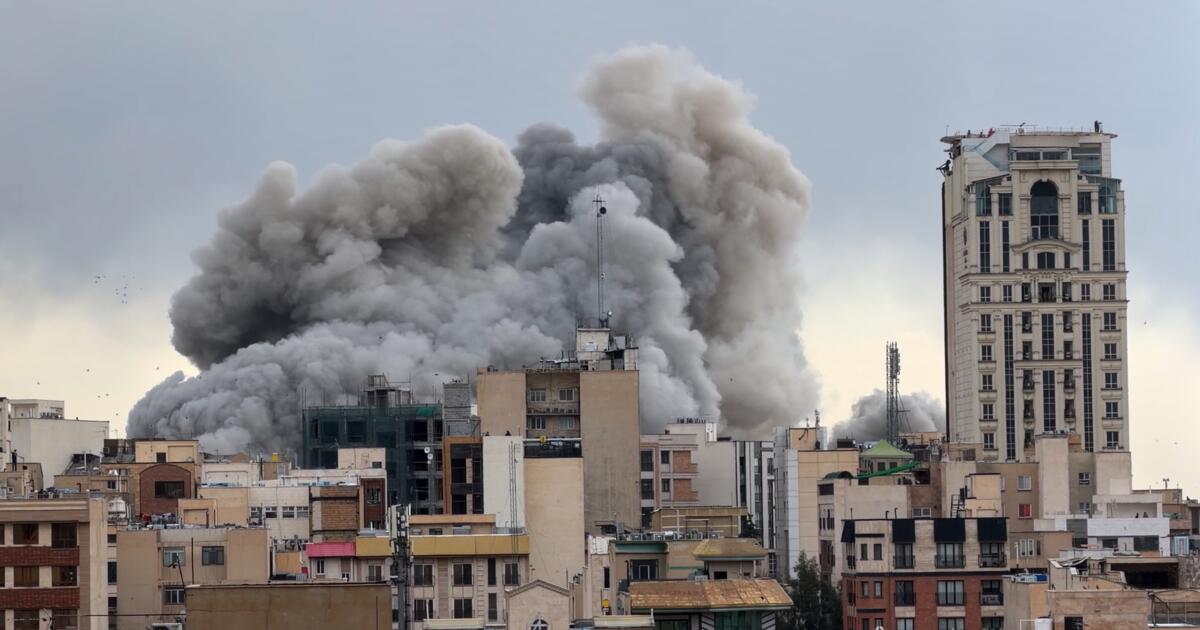

In response to U.S. and Israeli strikes, four American service members have been killed and several more seriously wounded in Iranian retaliatory attacks. Missiles and drones have struck U.S. installations in Bahrain and Kuwait, as well as civilian targets elsewhere in the Gulf. The central question surrounding American policy remains unchanged: What political objective is this war meant to achieve?
On Saturday morning, in an eight-minute video posted to social media announcing “major combat operations” against Iran, President Trump committed the United States to a widening war. When American presidents take that step, they normally articulate three things: the specific threat being addressed, the political objective to be achieved and the conditions under which the operation will end. Those elements shape force posture, targeting decisions and the risks American service members are asked to assume.
The president’s address offered forceful rhetoric. It offered little of that clarity.
In a single speech, the president invoked imminent self-defense, the elimination of Iran’s nuclear capability, the destruction of its missile industry, the annihilation of its navy, the dismantling of proxy networks across the Middle East and the overthrow of Iran’s government. He urged Iranian security forces to lay down their arms in exchange for immunity or “face certain death,” and told the Iranian public that “the hour of your freedom is at hand.”
These are not refinements of a single objective. They are different wars.
If the objective is to prevent Iran from acquiring a nuclear weapon, that would normally involve a defined campaign: specific facilities to be dismantled, verification mechanisms to be reimposed and a framework to prevent reconstitution. Destroying conventional military capability is broader. Regime change is something else entirely, raising the question of what political order follows. Each carries different costs, timelines and escalation risks.
In a subsequent video on Sunday, the president added that operations would continue “until all of our objectives are achieved,” without specifying what those objectives are. At a Pentagon briefing Monday, officials detailed operational complexity and tactical success but did not articulate the political conditions under which the war would conclude.
Trump justified the operation as necessary to eliminate “imminent threats.” Yet much of his address recounted decades of hostility, proxy violence and grievance. A history of enmity may explain resolve. It does not establish imminence. If the legal threshold for unilateral defensive action has been crossed, the nation deserves transparency about how and why.
The offer of “immunity” to Iranian security forces who surrender raises further questions. Immunity is a legal term that presumes authority. Authority presumes a political structure. To whom are these forces being asked to surrender? Under what framework would immunity be granted or enforced? Such ultimatums, absent a defined transitional plan, are rhetorical gestures rather than operational design.
The most consequential departure in the president’s Saturday address was its explicit encouragement of regime change. By telling Iranians to “take over your government” once bombing concludes, the administration moved beyond counterproliferation into political transformation. Iran has since confirmed that Supreme Leader Ayatollah Ali Khamenei was killed in the strikes. Trump has described the country as “very much destroyed” and pledged continued bombing for “as long as necessary” to achieve “peace throughout the Middle East.” Those statements frame leadership decapitation and coercive devastation as tools of political change. History offers little evidence that shock alone produces stable political order.
There is already reason to doubt the assumption that regime collapse would produce liberal transition. On Saturday, Reuters reported that U.S. intelligence assessments anticipated that in the event of sudden leadership decapitation, Iran’s Islamic Revolutionary Guard Corps would likely consolidate control. If that assessment is accurate, external force may strengthen the very hard-line structures it seeks to weaken.
In the hours following Trump’s Saturday address, the president layered additional grievances onto the justification for war, including allegations of electoral interference. However serious those claims may be, their introduction underscores the broader problem: The rationale for conflict appears to be expanding rather than narrowing. When grievances accumulate faster than objectives are defined, war ceases to be a disciplined instrument of policy and begins to resemble a repository for unresolved anger.
Serious war planning begins by identifying a vital national interest, defining clear and achievable objectives, and explaining the conditions under which hostilities will cease. In a constitutional system, Congress is vested with the authority to declare war, and the public is entitled to clarity about the aims for which American lives are being risked.
Is victory the verified dismantlement of specific nuclear facilities? The collapse of the current regime? The permanent degradation of Iran’s conventional forces? A negotiated settlement under new terms? Each implies a different level of commitment and a different definition of success. None has been clearly defined. Without that definition, military operations risk expanding to meet resistance rather than resolving it.
American pilots are now flying strike missions. Sailors are preparing for retaliation at sea. Soldiers are reinforcing regional bases as Iranian missiles and drones strike U.S. installations. The Pentagon has confirmed that four U.S. service members have been killed and others seriously wounded in retaliatory strikes. The president has said there will likely be more casualties before the conflict ends. Those losses are not abstractions. They are the cost of entering a war whose objectives remain broad and unclear.
When war aims expand in rhetoric — from defense to annihilation to regime collapse — without a defined political end state, they rarely contract on their own. The president has committed the U.S. to war. The country is still waiting to hear what winning means.
Jon Duffy is a retired naval officer. He writes about leadership and democracy.

