



Remote and hybrid work arrangements have become standard, leading to longer hours at desks and increased screen exposure. Data from the Office for National Statistics reveals that more than a quarter of working adults in Britain adopted hybrid schedules during autumn 2024.
The Rise of Hybrid Work Challenges
This shift intensifies not only screen time but also prolonged sitting. A new gaming desk offers a glimpse into an extreme solution, potentially keeping users glued to their workstations around the clock.
Electric Gaming Bed 2: Features and Design
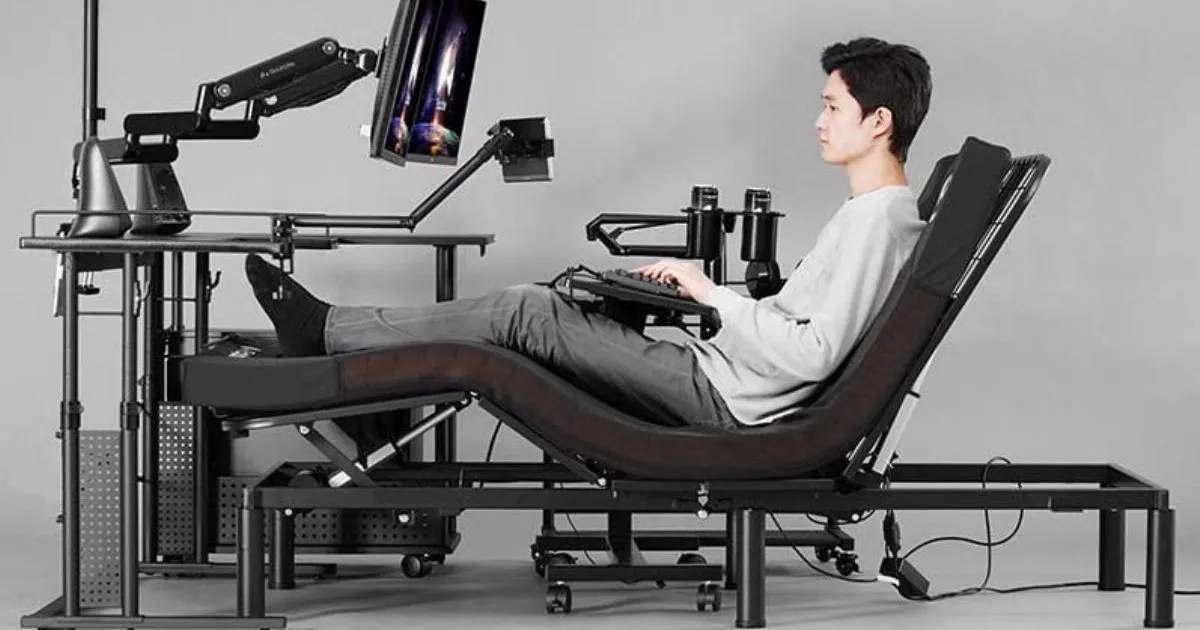
Japanese furniture maker Bauhutte introduces the Electric Gaming Bed 2, a three-part setup with a remote-controlled reclining seat that converts into a full bed. Marketed primarily to gamers, it enables eating, working, gaming, and sleeping without leaving the chair.
“Want to play games all day without moving a single step?” the company states on its website. Motorized adjustments allow users to raise or lower the upper body and legs effortlessly. A simple button press transforms the upright seat into a flat sleeping surface right at the desk.
The design supports setting up a food station, with an optional L-shaped extension accommodating a mini-fridge and microwave. The chair withstands up to 200kg, catering to a range of users.
Health Concerns Over Extended Desk Time
While appealing to busy professionals, experts highlight risks. Nuffield Health cautions that excessive screen time and blue light exposure can lead to retinal damage and heighten the risk of age-related macular degeneration.
No strict limits exist for adult screen time, but the organization recommends balancing it with physical activity, especially for those largely sedentary. Prolonged sitting exacerbates these issues.
Practical Tips to Combat Screen Strain
Nuffield Health provides actionable advice:
- Follow the 20-20-20 rule: Every 20 minutes, gaze at an object 20 feet away for at least 20 seconds.
- Install screen protectors or filters to cut blue light.
- Position screens at arm’s length.
- Take regular breaks and avoid screens in overly bright or dim settings to minimize glare.
These steps promote eye health and encourage movement amid rising desk-bound routines.

