



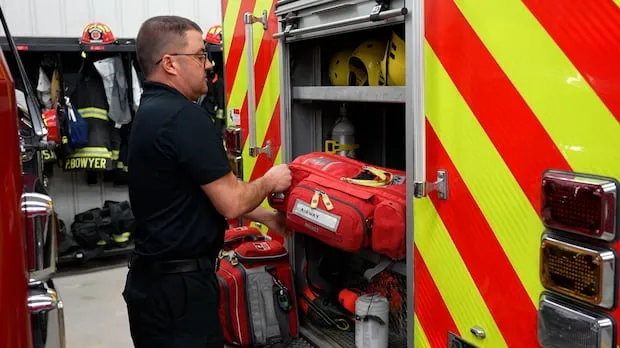

The number of firefighters qualified to handle medical emergencies has doubled in two southeast Manitoba municipalities thanks to updated regulations. These changes eliminate the need for the full provincial emergency medical responder licence, which demands 320 hours of training and significant costs. Fire departments can now seek approval from Shared Health to deploy firefighters trained in advanced first aid instead.
Niverville Fire Department Sees Major Boost
Starting March 1, volunteer firefighters in the Niverville and Emerson-Franklin departments equipped with advanced firefighter first aid training respond to medical calls. Niverville Fire Chief Keith Bueckert noted that shift workers previously created response gaps, but the new approach fills those voids as the community expands.
Niverville led the way by applying to Shared Health in February. The 40-member department increased its qualified responders from 14 to 28. Bueckert explained that provincial emergency medical responder training expanded to 320 hours from 120 in 2022, while the advanced first aid course mirrors the older program from 15 years ago, covering trauma and medical emergencies adequately.
For administering medications like aspirin or EpiPens, firefighters first contact the Virtual Emergency Care and Transfer Resource Service (VECTRS), a provincial hub launched in 2023 for clinical advice and transport aid. This setup, paired with 120 hours of training, equips Niverville crews to deliver oxygen, Narcan for overdoses, defibrillation, and even assist in births while ambulances travel from distant bases, Bueckert added.
Emerson-Franklin Expands Coverage
The Municipality of Emerson-Franklin operates firehalls in Emerson and Dominion City, serving over 1,100 square kilometers with 35 firefighters. Emerson Fire Chief Jeff French highlighted the absence of a local ambulance, with the nearest one 20 to 30 minutes away. Before approval, only six firefighters handled medical calls; French aims to qualify 15 to 20 soon.
Focus on Urgent Calls Reduces Strain
Under the new model, firefighters target only Priority 1 and 2 calls—the most critical ones. Lower-priority Priority 3 incidents, such as stomach aches, fall to other services. French said this cuts overall call volume, burnout, and related issues.
Municipalities pushed for this advanced first aid option, citing the heavy time and financial burden of full licensing for volunteer-based rural departments.
To retain emergency medical responders in rural areas, the province introduced $5,000 bursaries last November for completers of the training, requiring a one-year service commitment upon hiring.

