




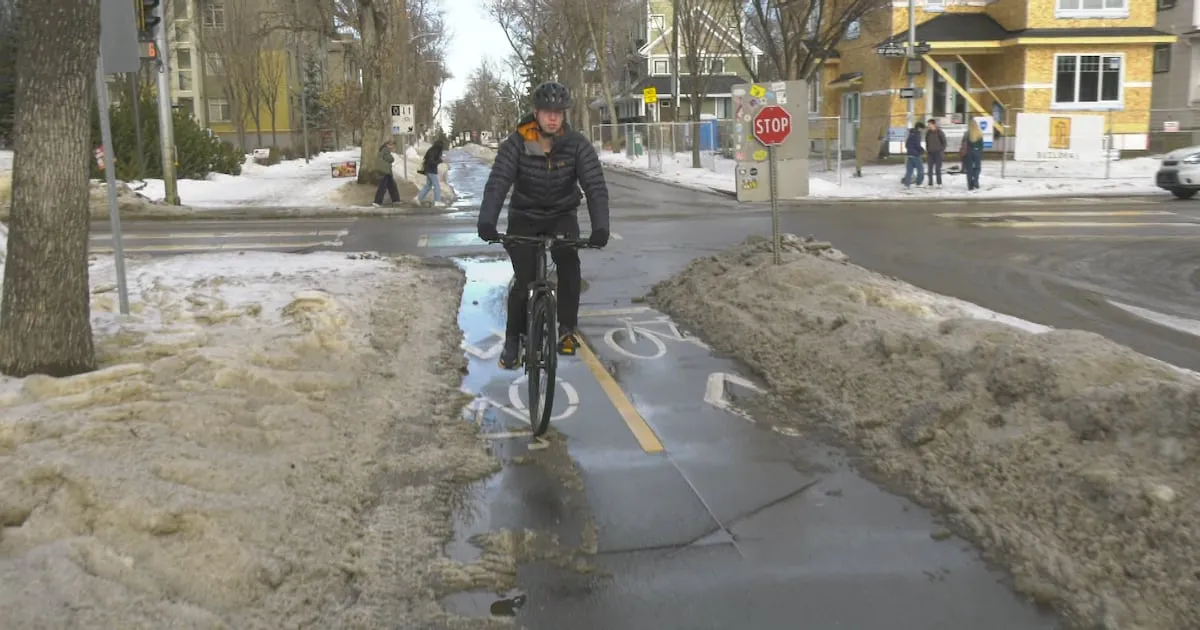

Advocates Push for Safer Winter Cycling Conditions
Community advocates are calling for enhanced winter maintenance of Edmonton’s active transportation network following persistent complaints about hazardous icy conditions. Ryan Jacques of Paths for People acknowledged the challenges faced by maintenance crews during this winter’s unpredictable freeze-thaw cycles but emphasized opportunities for improvement in pathway safety.
Persistent Ice Poses Challenges for Cyclists
“We’ve received numerous reports about dangerous ice accumulation on key cycling routes,” Jacques stated, citing ongoing issues along high-traffic corridors like the pathway system near the University of Alberta campus. While snow removal generally occurs within 24 hours of snowfall, residual ice patches continue to create hazards for cyclists navigating narrower tires through variable conditions.
Jacques highlighted drainage maintenance as a critical factor, pointing to recent improvements after crews cleared blocked drains that had caused large ice formations. “Proper drainage reduces water pooling that later freezes,” he explained. “Additional measures like snow removal from pathway edges and improved surface grooming could significantly enhance safety.”
City’s Ongoing Maintenance Efforts
City maintenance officials confirm crews are working around the clock to address winter pathway conditions. “We’re experiencing challenges across multiple pathway types due to repeated freeze-thaw cycles,” stated Valerie Dacyk, supervisor of snow and ice control operations. “Our teams treat Priority 1 routes to bare pavement standards while maintaining even surfaces on Priority 2 pathways.”
Current weather patterns have exacerbated icy conditions, with Dacyk noting: “December rainfall followed by melting and refreezing has created particularly difficult conditions this season. Our crews continue to monitor and treat all active transportation routes daily.”
Funding Priorities Under Review
City Council members indicate winter maintenance budgets and priorities will face scrutiny as active transportation use grows. Councillor Anne Stevenson, whose ward contains significant bike infrastructure, revealed winter cycling now averages 2,000 daily riders. “All options are being considered,” Stevenson said, “including potential use of calcium chloride and revised funding allocations to balance roadway and pathway maintenance needs.”
The councillor emphasized the growing importance of year-round cycling infrastructure: “Both drivers and cyclists expect safe travel conditions. We need comprehensive solutions that address Edmonton’s evolving transportation needs during challenging winters.”

