


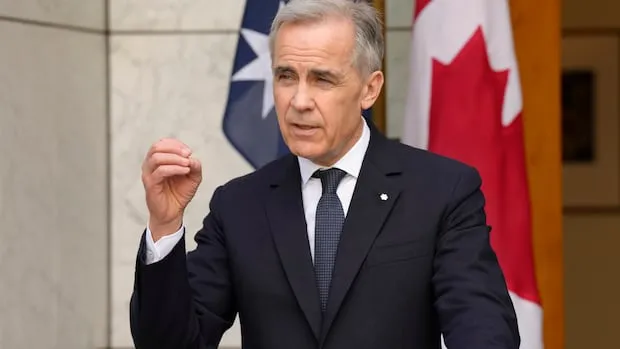

Prime Minister Mark Carney lands in Tokyo for a 24-hour visit to meet Japan’s newly elected Prime Minister Sanae Takaichi and strengthen ties with this vital Indo-Pacific ally. This stop caps Carney’s regional tour following visits to India and Australia, featuring a private one-on-one discussion, a cooperation signing ceremony, and closed-door business meetings.
First Leader to Meet Takaichi Post-Election
Carney becomes the first world leader to engage Takaichi since her landslide victory in February’s election. The timing aligns with her 65th birthday, prompting Carney to present a cake featuring Canadian maple syrup and other domestic ingredients for a Friday night dinner.
Pushing Japanese Auto Investments in Canada
With U.S. automakers retreating from Canadian assembly lines amid demands to prioritize American production, Japanese giants Honda and Toyota now dominate, producing 77% of Canada’s light vehicles in early 2026—up sharply from 44% in 2016, per data from the Trillium Network for Advanced Manufacturing at Western University.
In Tokyo’s business district, Carney seeks expanded investments from these firms to offset U.S. withdrawals and secure the sector’s future.
Reassuring Japan on China Trade Agreement
Discussions may address Carney’s recent pact with China, permitting 50,000 Chinese electric vehicles into Canada in return for tariff cuts on Canadian farm and seafood exports. Vina Nadjibulla, vice-president of research and strategy at the Asia Pacific Foundation of Canada, notes this narrow sectoral deal aims to maintain Canada’s strong alliance with Japan, its top East Asian partner.
“Japan watched the China trip with more trepidation than other allies,” Nadjibulla states. “As a major investor in Canada’s auto sector, Chinese entry carries implications for Japanese firms.”
She adds, “While focus remains on U.S. economic pressures, Japan faces ongoing challenges with China. Canada must demonstrate democratic solidarity through candid Indo-Pacific strategy talks.”
A senior government official dismisses Japanese worries, affirming the China deal poses no concerns. Canada and Japan recently inked a memorandum for intelligence sharing on defense procurement to streamline military equipment purchases. Further pacts are anticipated.
Building Leader Rapport and Long-Term Ties
Senator Peter Boehm, former top diplomat and chair of the Senate’s foreign affairs and international trade committee, emphasizes the visit’s value in fostering familiarity with a new G7 leader. “Japan ranks among the world’s top economies, third or fourth depending on metrics,” Boehm says. “Leaders need to connect personally.”
Nadjibulla echoes this, warning against neglecting the stable Canada-Japan partnership.
Diplomatic Gains from Prior Stops
Carney prioritizes trade diversification amid U.S. tensions. In India, deals worth $5 billion cover uranium, pharmaceuticals, and beauty products, plus a free trade agreement commitment by year-end. Australia yielded accords on critical minerals, defense, and AI cooperation.
IFM Investors, a leading Australian pension fund, pledged up to $10 billion in Canadian investments over the next decade, eyeing stakes in airports and roads if privatized. “We’re eyeing substantial opportunities,” states Kyle Mangini, IFM’s global head of infrastructure.
Canadian and Australian pension funds agreed to joint investments, enhancing business links. Carney shares strong rapport with Australian Prime Minister Anthony Albanese, who bid him farewell at the airport en route to Japan—mirroring gestures like Blue Rodeo records and dog treats gifted for Albanese’s recent birthday.

