




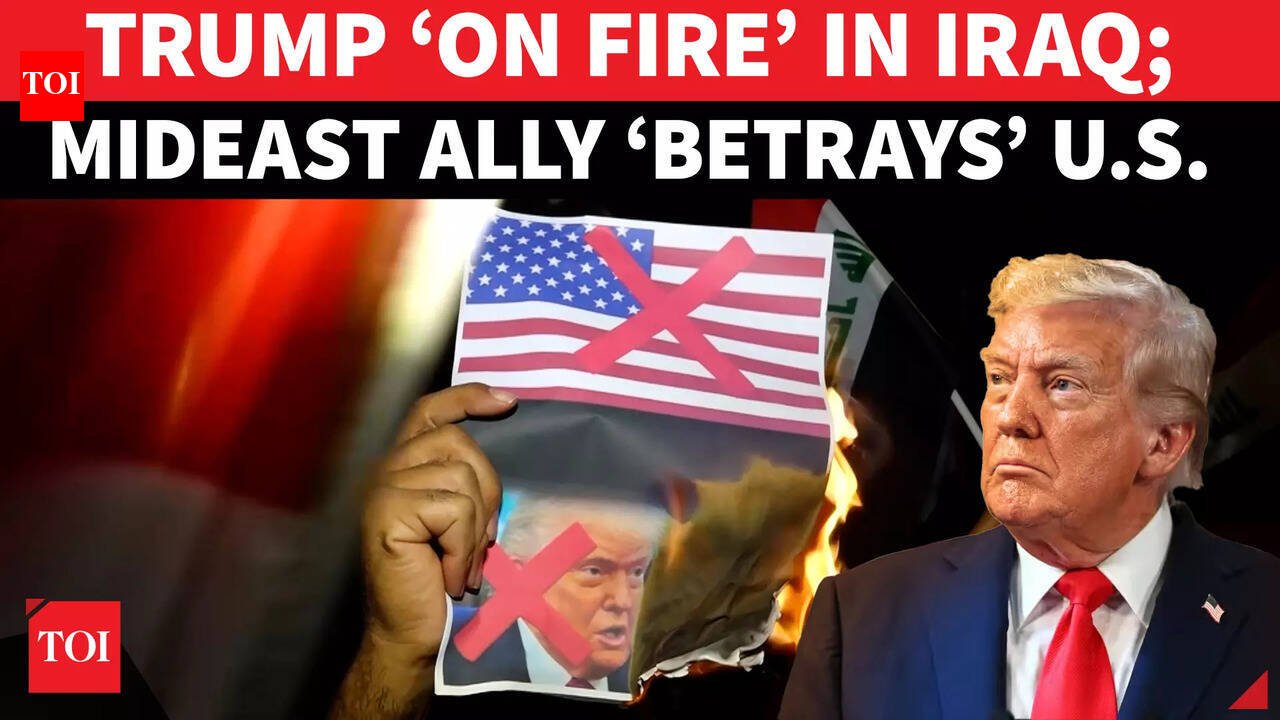

Civil Unrest Intensifies Near Baghdad’s Diplomatic Zone
Mass demonstrations broke out near the United States Embassy in Baghdad this week as Iraqi citizens voiced fierce opposition to perceived foreign meddling in their nation’s internal governance. Protesters gathered in significant numbers, burning images of U.S. President Donald Trump and chanting slogans that demanded an end to external pressure on Iraq’s political sovereignty.
The surge in public anger follows recent warnings from Washington regarding the potential return of former Prime Minister Nouri al-Maliki to a position of power. U.S. officials have suggested that such a political shift could lead to a reassessment of diplomatic relations and a potential suspension of financial and military aid, a stance that many Iraqis view as an infringement on their right to self-determination.
Rising Nationalism and Resistance to Foreign Pressure
The current unrest highlights a growing wave of nationalist sentiment across Iraq. After decades of conflict and reconstruction, there is an increasing desire among the populace to see a government that operates independently of both Western influence and regional power plays. The backlash against the U.S. administration’s comments reflects a broader frustration with the use of aid as a tool for political leverage.
Political analysts suggest that the threats to cut funding have backfired, instead unifying various domestic factions against what they describe as “tyrannical interference.” For many in the streets, the issue is no longer about specific political candidates, but about the principle of national autonomy.
Iraq’s Delicate Geopolitical Balancing Act
Baghdad currently finds itself in a precarious position, attempting to maintain a fragile stability while navigating the competing interests of the United States and regional neighbors like Iran. While the U.S. remains a key partner in security and counter-terrorism efforts, the local appetite for American oversight is rapidly diminishing.
As the political deadlock in Iraq continues, the government faces the difficult task of addressing the demands of its citizens for total independence while ensuring the country does not lose the international support necessary for its continued economic recovery. For now, the scenes outside the embassy serve as a stark reminder that the era of unchallenged foreign influence in Iraqi politics may be coming to an end.

