




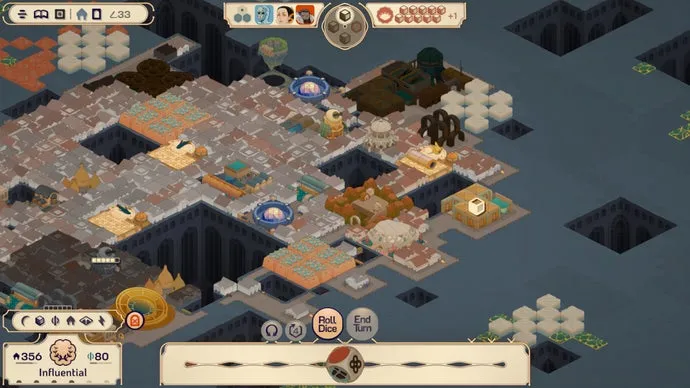

Amberspire stands out as a turn-based strategy puzzler, distinct from traditional city-builders like SimCity. Players manage a chaotic array of city-like agencies on a moon-sized mausoleum—a vast Venetian-style graveworld with fractured isometric crusts revealing endless archways and catacombs.
Unique Setting and Ecological Theme
The pervasive crypt environment evokes crushed church cemeteries amid skyscrapers, underscoring the challenge of constructing a populous, advanced city for interstellar recognition. Towers rise amid debris and pollution on this fertile necropolis, framing city-building as a dance with a deathly ecology rather than a quest for dominance.
Core Building and Resource Mechanics
Gameplay centers on placing buildings adjacent to suppliers of construction materials, manufacturing resources, or trade goods. Initial structures like kilns, furnaces, and crystallizers yield bricks, metal, and glass. Advanced options include observatories harvesting starlight and teahouses boosting bazaar trades.
Stretchy lines indicate resource-sharing ranges, with scrapyards extending reach. This shapes expansion, often requiring multiple playthroughs to optimize layouts. Materials evolve into abstract luxuries like “void,” “tides,” and “ritual,” reflecting shifting values in distant cultures.
Trade goods at marketplaces earn Influence points to unlock new city ages and buildings. Funnel resources to launch pads and transport hubs to grow population, essential for progression and workforce needs. Citizens build homes unpredictably within zones, blocking sites and forcing outward sprawl.
Dice-Based Production System
Buildings generate dice with 2-4 output faces rather than direct resources. Each turn, players select and roll up to six dice. Success hinges on chance, infusing routine tasks with peril and prompting strategic shifts like starting new projects or prioritizing population.
Turns group into rounds of four, with four re-rolls available—best saved for crises.
Dynamic Weather and Instability Challenges
Every fourth turn, the moon Amberspire rolls its own dice. Weather dice alter procedural terrain—blue silica fields, rust patches, fog clouds, or green ooze pools—that damage buildings. Drainage silos and similar structures counter these, while seasonal shifts like dust from sarcophagi intensify effects.
Overproduction risks adding weather dice. Instability dice, triggered by demolitions or blue resource dice (after three spent), cause catacomb collapses and building losses. Poor management leads to branching quests, like containment breaches, forcing Influence sacrifices or more instability.
Massive dice rolls create dramatic gaps, sprawling cities further amid fungal terrains and resilient citizen homes.
Playful Antagonism and Progression
Amberspire acts as a collaborative gambler. Goals pit player against landscape, yet the game remains forgiving—no Frostpunk-style catastrophes. Collapses integrate into the city’s vibrant tapestry, with colorful terrains enhancing sunmirrors and chapels.
Quest writing delves into subsurface mysteries. Easier than developer Lunar Division’s prior title, The Banished Vault, it demands embracing dice unpredictability. Late-game otherworldly races apply modifiers; disapproval caps dice rolls at four, fixable only by chance.
Cities emerge as disordered webs of teahouses, forts, and fogbreakers amid rust, pits, and launching ships—testaments to shared creation.

