



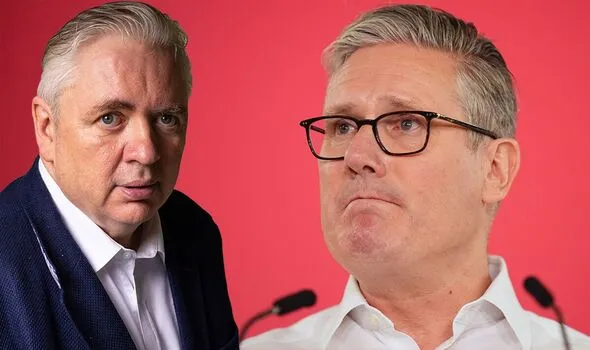

The Prime Minister’s authority has eroded swiftly since his landslide victory in the July 2024 General Election. Public support has waned rapidly, with recent opinion polls showing historically low approval ratings. This discontent manifested in Labour’s poor performance during local elections, sparking internal party strife, ministerial resignations, and no-confidence ions from MPs.
Leadership Standoff in Westminster
Despite mounting pressure, Keir Starmer maintains his position, citing party rules that require a challenger backed by at least one-fifth of Labour MPs to trigger a leadership contest. No such nomination has emerged, allowing him to remain in office amid the turmoil.
Supporters argue that the current international tensions, including the global economic fragility and the US conflict with Iran, demand leadership continuity. However, critics draw parallels to historical precedents, such as Neville Chamberlain’s 1940 reluctance to step down amid the Nazi invasion of France due to lost credibility.
Historical Labour Leadership Challenges
Labour has rarely seen direct challenges to incumbent prime ministers since the party’s first government in 1924. Plots, like David Miliband’s 2008 effort against Gordon Brown, typically faltered. In opposition, contests have been more common:
- Owen Smith lost decisively to Jeremy Corbyn in 2016.
- Tony Benn suffered a major defeat against Neil Kinnock in 1988.
- Hugh Gaitskell repelled challenges from Harold Wilson and Tony Greenwood in the early 1960s.
- Clement Attlee overcame Herbert Morrison after the 1935 election loss.
- Ramsay MacDonald succeeded against J.R. Clynes in 1922, the only victorious prime ministerial challenge.
Labour’s culture often favors sentiment over decisive action, contrasting with the Conservatives’ approach.
Policy Challenges and Public Backlash
Starmer’s tenure has featured policy reversals, including the withdrawal of winter fuel allowances for most pensioners and a National Insurance increase that hampers job growth. Defence commitments appear neglected, highlighted by limited naval deployment to the Mediterranean during recent US actions against Iran.
Other issues include the Chagos Islands handover, unmet pledges to combat Channel migrant smuggling—reaching 200,000 arrivals since 2018—and soaring energy costs tied to net-zero goals. Borrowing costs rise alongside welfare spending, fueling voter frustration ed in the local elections’ anti-Labour surge, where over 1,400 councillors were lost.
Many voters feel alienated, perceiving a disconnect between government priorities and concerns over borders, welfare, and national identity.
Response to Electoral Defeat
Following the losses, Starmer appointed Harriet Harman and Gordon Brown as advisers, while pledging closer EU ties despite Reform Party gains in traditional Labour areas like the Red Wall. A recent major speech failed to rally support, criticized for lackluster delivery and content.
Internal Dysfunction and Succession Concerns
Scandals, such as Peter Mandelson’s US ambassador appointment and donor perks, compound high staff turnover: seven advisers, a Cabinet Secretary, two Chiefs of Staff, and five Communications Directors in 18 months. Associates describe a lack of political instinct.
Durham MP Mary Kelly Foy stated, “We’ve reached an existential crisis. Labour lies on its deathbed.” The party faces squeezes from Greens on the left and Reform on the right, eroding its working-class and professional base.
Potential successors like Andy Burnham, Angela Rayner, and Wes Streeting carry their own challenges, raising doubts about stabilizing the party post-Starmer.

