





Wherever you look in American politics right now, you’ll find legislators saying the government still doesn’t tax enough — especially when it comes to the wealthy. California progressives are pursuing a wealth tax on billionaires, advertised as a method to raise $100 billion in a single stroke. New York City Mayor Zohran Mamdani is pushing for sweeping new taxes on the wealthy to fund a vast expansion of city services. And Washington state politicians are treating a preventable budget problem as a failure to sufficiently tax corporations and the rich.
The same is true on the national stage. Progressives including Bernie Sanders and Elizabeth Warren have spent years insisting the deficit is fundamentally a revenue problem. Republicans embrace tariff collections in the name of raising revenue, too. And, as Cato Institute tax scholar Adam Michel observes, they’ve drifted toward justifying tax cuts as “paying for themselves” rather than as a principled reduction in the size of government, implicitly conceding that revenue is the variable to focus on.
They’re all wrong. The problem is not that the government collects too little. It’s that the government spends too much.
In 1950, Michel documents, total government spending constituted roughly one-fifth of the U.S. economy. That figure has now risen to more than one-third. Real spending per person quadrupled over that same period. Jack Salmon of the Mercatus Center traced this phenomenon back to determine exactly where the long-term structural deficit comes from, and found that 98% is due to spending decisions. About two-thirds of this deficit reflects the compounding cost of interest on debt we’ve already accumulated. The remainder is mandatory program growth, above all with Medicare, which is on a trajectory to nearly triple as a share of gross domestic product by mid-century compared with its historical average.
No plausible tax increase can close a gap like that. There’s a hard empirical ceiling on how much revenue the government can actually extract, regardless of what tax rates it sets.
Federal tax revenues have averaged around 17% of GDP since World War II despite the top federal tax rate ranging from 28% to 91% in that time. The revenue share hasn’t moved much, reaching 19.8% in 2000 thanks to economic growth, and promptly declining after that.
It’s simple: When tax rates rise, taxpayers work less, shelter their money and invest differently, compressing the tax base until the yield reverts to its historical equilibrium. Politicians also respond to high taxes by hollowing out the base. Tax carve-outs currently reduce federal revenues by about 8% of GDP.
Some argue that the solution is the European model of value-added taxes (VATs) and high payroll levies. Michel estimates this would increase the average American household’s tax bill by roughly $12,000 per year, a heavy burden for the lower- and middle-classes. But there’s a deeper problem: Europe’s approach doesn’t work, either.
Look at France, which has everything the American left claims to want: a 20% VAT, top income tax rates exceeding 45%, a lingering remnant of its old wealth tax and a state that consumes roughly 57% of GDP with its spending, among the highest in the developed world. But with public debt standing at approximately 116% of GDP, France didn’t tax its way to solvency. All that revenue doesn’t keep pace with the country’s spending.
Washington state is running its own experiment. Its biennial operating budget exploded from $102 billion to $166 billion over six years, far outpacing inflation and population growth combined. As this was unfolding, state politicians enacted a 7% capital gains tax on high earners. Thousands left the state, and took their incomes with them.
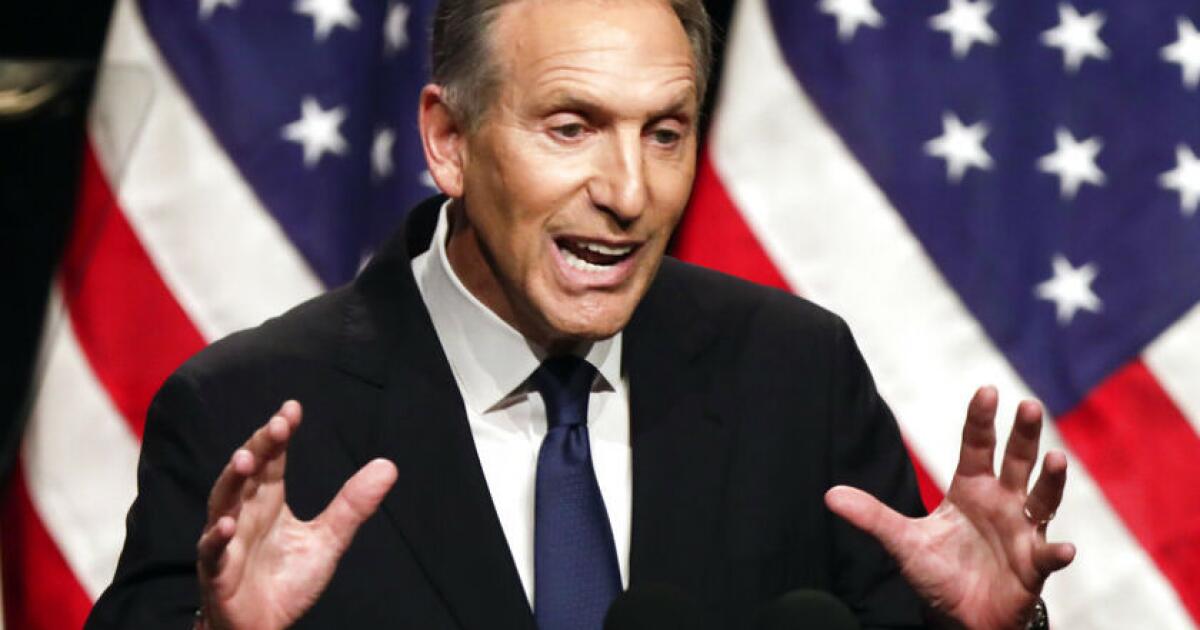
Now, state Democrats are proposing a 9.9% income tax on high earners. Probably not coincidentally, former Starbucks CEO Howard Schultz is heading to Florida. Businesses are also signaling relocation.
Washington isn’t solving a revenue problem; it’s trying to fund a spending problem with a tax that will shrink the necessary tax base. Connecticut learned the pattern after adopting a state income tax in 1991. Higher taxes enable more spending, which requires still higher taxes, which cause taxpayers to flee and growth to slow. The cycle is self-reinforcing.
The same will happen to California if it adopts the billionaire — or some future millionaire — wealth tax. That $100 billion in a single year that proponents promise? It won’t happen. Researchers at the Hoover Institution found six publicly confirmed departures of billionaires before the tax even passed, removing nearly 30% of this projected tax base. More damaging is the future income tax revenue California would forgo by driving those taxpayers out, which makes this wealth tax likely to produce a negative net fiscal return. The state may end up with less revenue than if it had done nothing.
Governments don’t face fiscal crises because they passively tax too little. It’s because they chose to spend too much. Dramatic new taxes can temporarily mask an imbalance, but they can rarely solve one. More often, higher taxes give politicians cover and enable even more spending growth. This merely delays the reckoning and makes the eventual adjustment more painful.
Veronique de Rugy is a senior research fellow at the Mercatus Center at George Mason University. This article was produced in collaboration with Creators Syndicate.
Insights
L.A. Times Insights delivers AI-generated analysis on Voices content to offer all points of view. Insights does not appear on any news articles.
Viewpoint
Perspectives
The following AI-generated content is powered by Perplexity. The Los Angeles Times editorial staff does not create or edit the content.
Ideas expressed in the piece
The fundamental fiscal problem facing the United States stems from excessive government spending rather than insufficient taxation, with total government spending rising from roughly one-fifth of the economy in 1950 to more than one-third today and 98% of the long-term structural deficit attributable to spending decisions rather than revenue shortfalls.
Federal tax revenues have remained relatively stable at around 17% of gross domestic product since World War II despite top federal tax rates fluctuating between 28% and 91%, demonstrating a hard empirical ceiling on government revenue extraction that no plausible tax increase can overcome.
Higher tax rates on the wealthy produce predictable behavioral responses including reduced work effort, sheltering of income, and altered investment strategies that compress the tax base until yields revert to historical equilibrium levels, while politicians further erode the base through carve-outs that currently reduce federal revenues by approximately 8% of gross domestic product.
Proposed wealth taxes will fail to generate projected revenues and may produce negative fiscal returns, as demonstrated by California’s billionaire tax proposal where researchers at the Hoover Institution identified six confirmed billionaire departures before the tax even passed, eliminating nearly 30% of the projected tax base and future income tax revenue.
The European model of high value-added taxes and substantial payroll levies offers no workable alternative, as countries like France with a 20% VAT, top income tax rates exceeding 45%, and government spending consuming 57% of gross domestic product still face public debt at approximately 116% of gross domestic product despite high revenue collection.
States pursuing aggressive taxation of high earners demonstrate the self-reinforcing cycle of higher taxes enabling more spending, which requires still higher taxes, causing taxpayers to flee and growth to slow, as evidenced by Washington state’s trajectory of explosive budget growth paired with capital gains and proposed income taxes prompting business relocation.
Different views on the topic
A wealth tax represents a fair and necessary response to significant fiscal challenges, with one proponent arguing that California’s proposed billionaire tax addresses a $100 billion state budget hole resulting from federal funding cuts to healthcare and food assistance, and that such taxation reflects basic fairness given that the wealthy can afford to contribute more to public needs[1].
Concerns about wealthy individuals departing due to taxation are overstated, with projections indicating substantial net revenue generation from targeted wealth taxes and evidence suggesting that threats to relocate rarely materialize in practice despite being frequently invoked[1].
The concentration of wealth and income gains among the richest segments of society justifies increased taxation, as research indicates that between 1975 and 2023 the bottom 90% of workers transferred $79 trillion in inflation-adjusted dollars to the wealthiest 10%, representing a massive progression of wealth distribution compared to the post-World War II period[2].
Wealthy individuals and corporations maintain substantial discretionary spending capacity despite claims of illiquidity, as demonstrated by tech industry leaders planning to invest $650 billion in artificial intelligence development and other ventures, indicating that assets are available for taxation even when not held as literal cash reserves[2].
Recent corporate tax practices challenge assertions that high earners already bear disproportionate burdens, with examples such as Amazon reducing its annual tax payments from $9 billion in 2024 to $1.2 billion in 2025 following tax policy changes, suggesting room for additional revenue collection from wealthy entities[2].
Some elected officials support wealth taxation mechanisms that include protections for middle and lower-income residents, with one governor conditioning support for higher-income tax proposals on ensuring that revenue returns to those populations through sales exemptions, small business relief, or comparable mechanisms rather than opposing such taxes entirely[1].

