




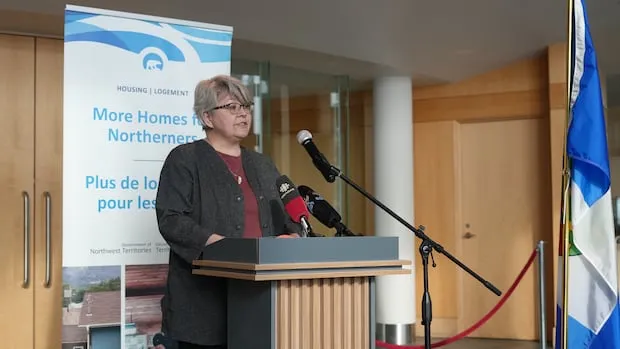

The Northwest Territories faces a severe housing shortage, requiring up to 2,700 homes to address current demand and thousands more to replace aging structures by 2044. This marks the government’s first detailed housing needs assessment in 26 years, providing key data to secure federal funding through initiatives like the Build Canada Homes fund, according to Housing Minister Lucy Kuptana.
Current Housing Challenges
In 2024, over one-third of households in the territory struggle with unaffordable housing, major repairs, or overcrowding. A majority of households fall into core housing need, as defined by the Canadian Mortgage and Housing Corporation—units that are unaffordable, lack sufficient bedrooms, require significant repairs, and offer no suitable local alternatives.
Indigenous households represent 50 percent of those studied but comprise 71 percent of residents in substandard dwellings. Single mothers account for 30 percent of households in core need.
Aging Infrastructure and Replacement Needs
Much of the territory’s housing stock nears the end of its lifespan, with more than half of homes over 35 years old. Construction peaked between 1981 and 1990, but new builds declined sharply in the early 1990s. Currently, 427 homes require replacement, and officials project 1,000 more within two decades, stated Chris Van Dyke, manager of community housing and planning at Housing N.W.T.
Future Demand Projections
To keep pace with growth, the territory must add 1,030 homes over the next 20 years, totaling 2,500 new units by 2044. This assessment, while not a formal plan, guides government efforts to improve housing conditions.
Government Investments and Community Input
Housing N.W.T. President Erin Kelly announced $150 million in territorial funding over three years for repairs and replacements. “We’re all really hopeful that this assessment and related efforts will help address these concerns,” she said. The analysis draws from meetings with leaders in 20 of the territory’s 33 communities, plus around 450 written responses from residents in others, despite challenges like wildfires, community losses, and elections.
Disparities in Small Communities
Housing inadequacy rates reach extreme levels in smaller communities compared to major centers. Homeowners there face heightened maintenance issues and often shelter extra residents due to local shortages. Demand spans all income levels for one- or two-bedroom homes, with growing needs for accessible units as the population ages.
Homeownership pathways remain limited, especially in Yellowknife where unaffordability peaks. Many young adults live with parents, exacerbating overcrowding.
Affordability Pressures from Higher Costs
Affordability metrics overlook elevated living expenses in remote areas. Goods cost 20 percent more in Yellowknife than in Edmonton, and nearly double in communities like Sachs Harbour, Ulukhaktok, and Paulatuk. Utilities and groceries further strain budgets in small centers, Van Dyke noted.
Housing Minister Kuptana highlighted how shortages drive encampments, underscoring the urgency for transitional housing. Public housing waitlists total 900 households territory-wide, with hidden homelessness affecting every community, Van Dyke added.

