





March brings opportunities for homeowners to revive unruly, moss-covered lawns after winter. Gardeners’ World presenter Monty Don recommends focusing on one essential task: enhancing grass health to naturally combat moss.
Addressing Moss Through Better Drainage
Monty Don explains that healthy grass thrives in well-drained soil. Moss signals poor drainage, often worsened by shade and compaction from roots, rain, and foot traffic. “The best grass likes very well-drained soil. Moss, for example, is always a symptom of poor drainage, made worse by shade. Unfortunately, even the best-prepared soil becomes compacted by matted roots, rain and, especially, normal family use,” he states.
Waterlogged conditions allow moss to flourish while grass roots suffer from rot, disease, and restricted access to nutrients and sunlight, leading to patchy spring growth.
Aerate with a Garden Fork
Pierce the soil using a garden fork, wiggling it every six inches to aerate the lawn. This creates channels for better air and water flow to the roots, alleviating compaction.
Apply Nutrient-Rich Mulch
After aeration, prepare a simple mulch by mixing equal parts sieved topsoil, sharp sand, and sieved leaf mold or compost. Sharp sand alone works if other materials are unavailable. Monty Don advises: “Mix up equal portions of sieved topsoil, sharp sand and sieved leaf mould or compost. If you do not have these things to hand, then just sharp or silver sand will do the job. Spread it across the area you have pricked and brush it in with a stiff broom, filling the holes with the mixture. This will help drainage and feed the grass.”
This topdressing improves drainage, feeds the grass, strengthens it against weeds and moss, and promotes denser growth.
Rake, Remove Debris, and Mow
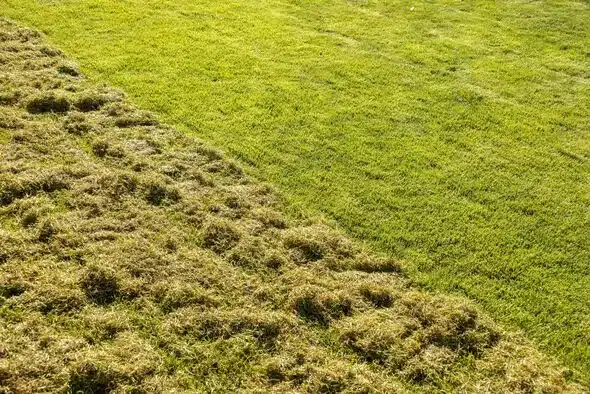
Follow up with a wire rake to clear overwintering thatch and moss, allowing light and water to reach the soil and roots. Monty Don notes: “It is also worth giving the lawn a good scratch with a wire rake. This will get at all the overwintering thatch and moss, and let light and water get to the soil and to the roots of the grass. Put the debris on the compost and then mow. It will look a little bald for a week or so, but will grow back thicker than ever.”
Compost the debris and mow promptly. The lawn may appear thin temporarily but rebounds lush and robust.
Completing these steps in March yields a vibrant, moss-free lawn ready for spring enjoyment.

