




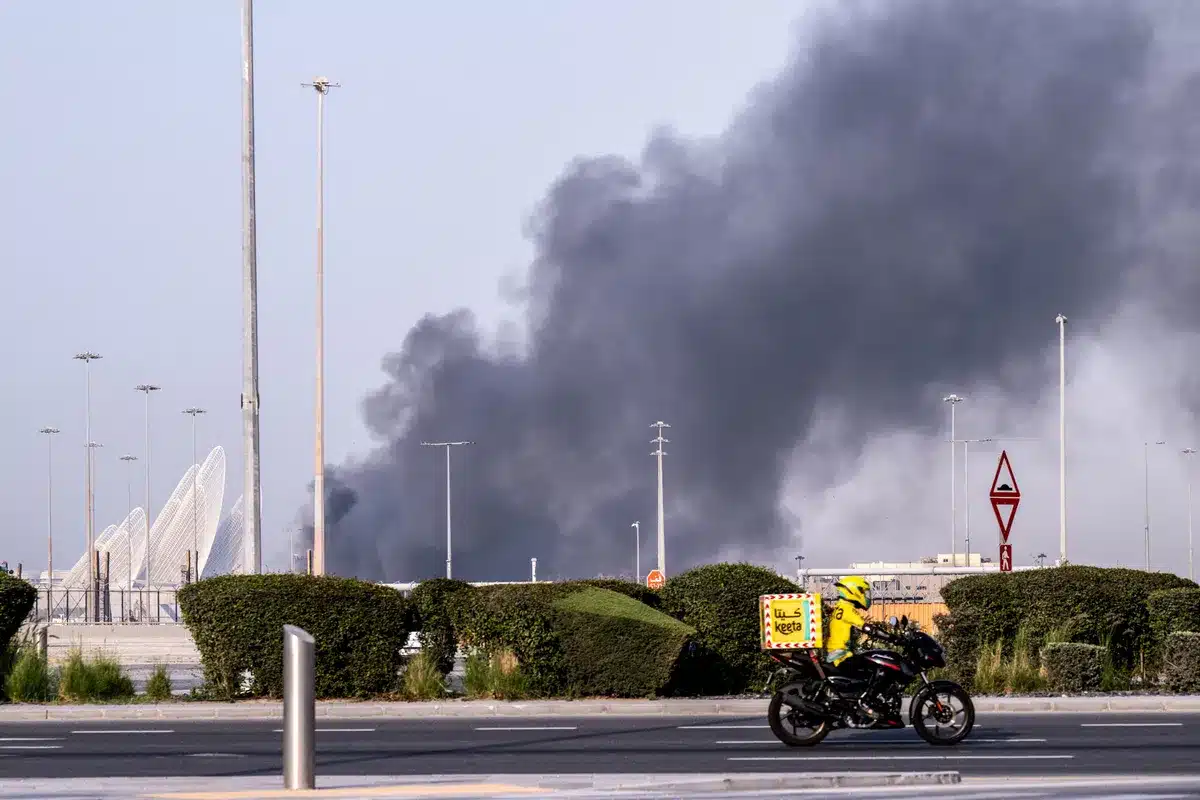

Missile strikes across the Middle East challenge the safe haven reputation of Persian Gulf nations, disrupting the investment appeal that draws wealthy foreigners and Canadian companies to the region.
Gulf Cities Emerge as Global Hubs
Over the past two decades, cities like Dubai and Abu Dhabi in the United Arab Emirates, along with Doha in Qatar, have transformed into major commerce centers. Oil-rich governments have invested in cutting-edge infrastructure and iconic skyscrapers. These locations stand out for their political neutrality—similar to Switzerland—shielding them from regional conflicts. Combined with minimal tax rates, this stability attracts high-net-worth individuals and substantial investment capital.
Canadian Firms Expand in the Gulf
Brookfield Asset Management actively raises funds in the region. Royal Bank of Canada and National Bank of Canada pursue growth opportunities there. Manulife Financial Corp. and Sun Life Financial Inc. recently established Dubai offices to serve affluent international clients.
Recent Iranian Retaliatory Strikes
Safety perceptions shifted dramatically after Iran responded to missile attacks that killed Supreme Leader Ayatollah Ali Khamenei. Over two days, debris from 390 missiles and 830 drones struck airports in Abu Dhabi and Dubai, the Burj Al Arab hotel, a Bahrain high-rise, and Fairmont’s The Palm in Dubai, injuring four people in a parking area.
Kristian Coates Ulrichsen, a Middle East fellow at the Baker Institute for Public Policy, notes, “The image of Gulf cities as stable havens and safe places to live, work, and do business is now under attack.” He describes the events as a “rude awakening for many of the expatriate residents, tourists, and other visitors, and may inflict psychological damage that is hard to measure, but may be difficult to unsee, especially if the disruption lasts longer than just a few days.”
Potential Impact on Global Capital
Karen Young, a senior research scholar at Columbia University’s Center on Global Energy Policy and Gulf economic expert, highlights risks to capital flows. “More and more, Gulf investment vehicles, either fully- or partially-state owned, are now preferred partners in infrastructure investment and private equity funds globally and now serve as a dominant source of capital in the energy sector and in technology and AI,” she states.
Gulf sovereign wealth funds manage hundreds of billions and increasingly invest westward to diversify from oil. In late 2024, Abu Dhabi’s Mubadala Capital acquired Canadian asset manager CI Financial for $4.7 billion.
Canadian Prime Minister Mark Carney visited Doha in January, securing commitments from Qatar’s Amir, His Highness Sheikh Tamim bin Hamad Al Thani, for “significant strategic investments in Canadian nation-building projects.”
Infrastructure Boom Faces Disruption
The Gulf excels in massive infrastructure projects drawing Canadian expertise. In 2022, Quebec’s Caisse de dépôt et placement du Québec partnered with DP World on a US$5 billion investment in UAE assets, including Dubai’s Jebel Ali Port—one of the world’s largest—and the 21-square-kilometer National Industries Park for manufacturing.
DP World halted Jebel Ali operations over the weekend after debris from an intercepted Iranian missile or drone sparked a fire, according to Dubai authorities. The Caisse confirms it maintains no offices or staff in the Gulf and closely monitors developments.
Montreal-based WSP Global Inc. contributed to Abu Dhabi’s Zayed National Museum, Kuwaiti highway upgrades, and the Kuwait Children’s Hospital. AtkinsRéalis Group Inc. also benefits from the regional boom.
Outlook Amid Uncertainty
U.S. President Donald Trump expressed willingness to engage Iran’s new leadership, potentially leading to a ceasefire and restored investment flows. Dubai drew the most millionaires worldwide in 2025, per Henley & Partners consultancy.
However, Iran’s leadership vacuum could spark wider instability, underscoring the Gulf’s fragile promise of security.

