




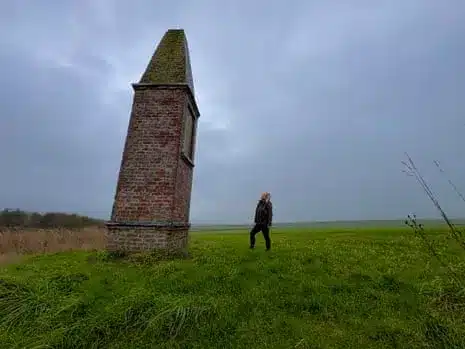

A brick obelisk rises on a low hill in the Yorkshire Wolds, hidden behind trees and a modest holiday park at the field’s edge. Its plaque proclaims in bold, varied fonts: “Here, on this spot, Decr. 13th, 1795 / fell from the Atmosphere AN EXTRAORDINARY STONE / In breadth 28 inches / In length 36 inches…”
The Wold Cottage Meteorite Legacy
This monument commemorates the Wold Cottage meteorite, the first stone universally accepted as extraterrestrial. The space rock, which traveled 4.56 billion years, now displays in the Natural History Museum’s Treasures Gallery.
Witnesses, including a ploughman pelted by impact debris, saw the meteorite strike. The era’s landowner—a playwright and newspaperman—engaged local artisans to erect this distinctive marker.
Ordnance Survey maps note the site subtly, demanding keen awareness to locate. Today’s owner permits public access.
Cosmic Wonder Amid Winter Dreariness
On overcast winter days, visitors navigate muddy paths and peer through icy drizzle, discovering the sky’s capacity to yield rare treasures alongside rain and sleet.
Echoes in Modern Storytelling
A recent series, Small Prophets by Mackenzie Crook, portrays a meteorite plunging into a Manchester suburb cul-de-sac. It celebrates boundless, unexpected marvels anywhere.
Such alignments affirm that open exploration of landscapes fosters slim probabilities into certainties, drawing extraordinary occurrences.

