




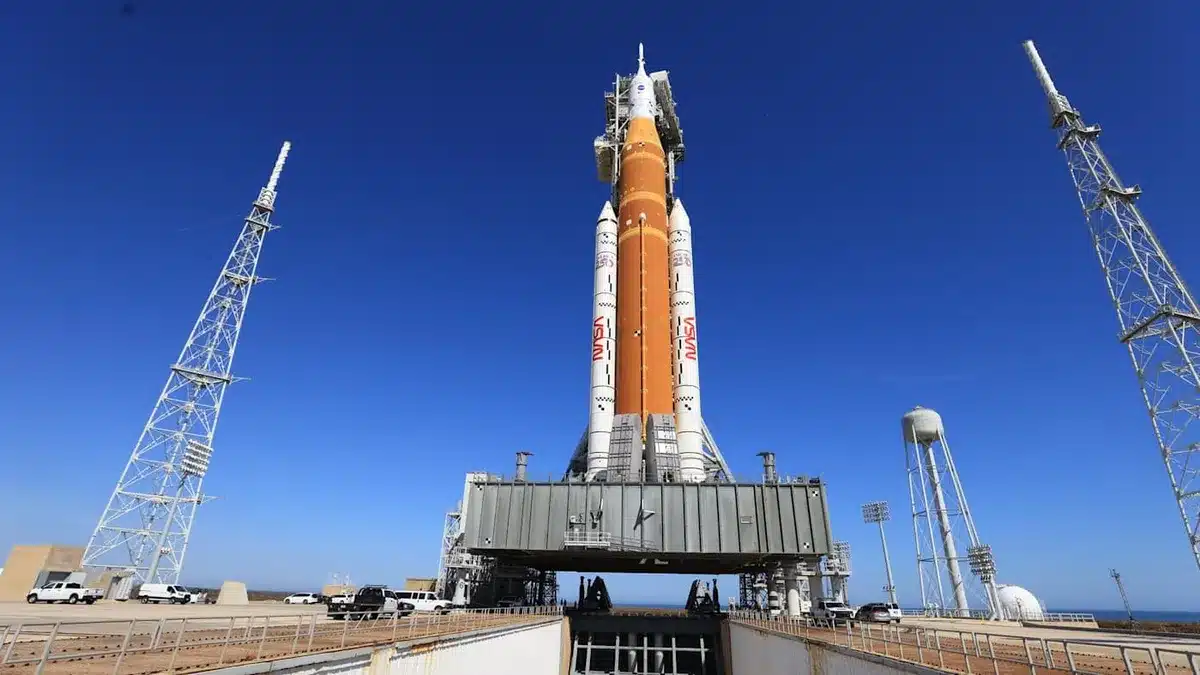

NASA has postponed the Artemis II launch, the agency’s first crewed mission near the moon since the Apollo era over 50 years ago. Preparations at Kennedy Space Center for a March 6 liftoff halted after teams detected a helium flow problem in the Space Launch System (SLS) rocket’s upper stage over the weekend.
Rollback to Vehicle Assembly Building
The agency plans to move the SLS rocket and Orion spacecraft from the launch pad back to the Vehicle Assembly Building (VAB), a four-mile journey expected to take several hours. NASA targets February 24 for the transport. A media briefing this week will outline the issue and next steps.
NASA Administrator Jared Isaacman stated on X that the rollback eliminates the March launch window. Officials note this action could preserve an April opportunity, depending on repair outcomes and scheduling in the coming weeks.
Details of the Helium Flow Problem
The malfunction occurred overnight on February 21, interrupting helium supply to the SLS interim cryogenic propulsion stage. Helium maintains optimal conditions for the stage’s engines and pressurizes liquid hydrogen and oxygen tanks.
Systems functioned during recent Artemis II wet dress rehearsals, which ended February 19. However, helium flow failed during subsequent normal operations and reconfiguration. Teams now use a backup method to safeguard the upper stage and rocket, which remains in a stable state.
Crew and Mission Background
The Artemis II crew includes Commander Reid Wiseman, Pilot Victor Glover, Mission Specialist Christina Koch, and Canadian Space Agency astronaut Jeremy Hansen as Mission Specialist. The astronauts entered quarantine just before the issue surfaced but have since exited.
This 10-day flight marks the first crewed SLS launch. The crew will orbit the moon in Orion. NASA accelerated the timeline earlier this year from April 2026, following 2024 delays. An initial early February target shifted to March due to wet dress rehearsal challenges, with April now a potential option if repairs proceed swiftly.

