




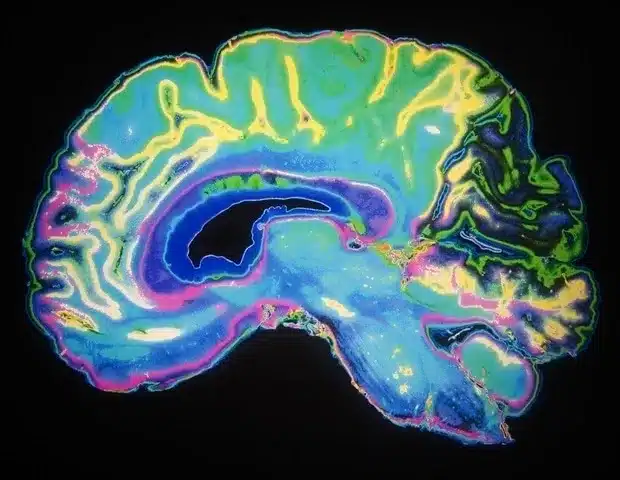

Researchers have created high-resolution 3D maps of mouse brains, pinpointing over 10 million oligodendrocytes—cells that produce myelin, the protective sheath around nerve axons that accelerates electrical signal transmission and supports brain function.
These maps, published online on February 18 in Cell, illustrate variations in myelin content across brain circuits and offer insights into diseases like multiple sclerosis and Alzheimer’s, which impair learning, memory, sensation, and movement.
Advanced Imaging and AI Techniques
The maps achieve superior resolution and gray matter coverage compared to prior efforts. Gray matter, home to most neurons and key for movement and other functions, poses challenges for traditional MRI due to less visible myelin.
“Because myelin speeds neuron communication, these maps of regional myelin differences help explain how brain areas handle distinct tasks,” states Dwight Bergles, Ph.D., the Diana Sylvestre and Charles Homcy Professor in the Department of Neuroscience at Johns Hopkins University School of Medicine.
Oligodendrocytes appear throughout the brain, though myelin concentrates in white matter, the primary pathways linking regions. The project, led by Bergles and first author Yu Kang T. Xu, a Ph.D. student and Kavli Neuroscience Discovery Institute fellow, combined tissue clearing to eliminate obscuring fats, light-sheet microscopy for swift full-brain scans, and machine learning to identify and map cells automatically.
Dynamic Changes Over the Mouse Lifespan
Maps track oligodendrocyte positions from two months to two years of age. Mice gain oligodendrocytes steadily with age, but formation rates differ sharply by region. Early slow-growth areas maintain that pace lifelong, indicating a fixed developmental blueprint.
“Our study pinpoints oligodendrocyte locations while integrating gene expression and neuron structures—like mapping a forest’s trees alongside soil, weather, and geology,” Bergles explains.
Formation proves especially drawn-out in memory-critical areas like the hippocampus. Sensory input regions boast three times more oligodendrocytes than the primary motor cortex, likely enabling rapid processing of touch, sound, and vision.
Implications for Brain Diseases
In mice treated with oligodendrocyte-destroying chemicals, certain regions show heightened vulnerability or resilience, potentially guiding myelin protection strategies for multiple sclerosis.
Within an Alzheimer’s model, myelin damage extends beyond dense-core amyloid-beta plaques to diffuse plaque areas in white matter. This pattern underscores oligodendrocyte dysfunction’s role in the disease, Bergles notes.
“Future applications could explore how stress, social interactions, or learning alter these patterns,” Bergles adds.
The interactive maps are freely accessible to researchers worldwide, accelerating further breakthroughs. Xu, Y.K.T., et al. (2026). Brain-wide mapping of oligodendrocyte organization, oligodendrogenesis, and myelin injury. Cell. DOI: 10.1016/j.cell.2026.01.025.

