




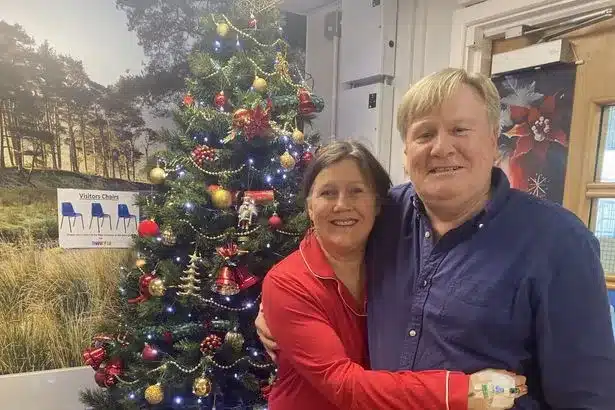

A 64-year-old driver has been praised as a hero for rescuing his wife during a life-threatening cardiac arrest on the M56 motorway.
The Sudden Emergency
Paul Cutler, a former mayor and current councillor, was driving from Kent to the Wirral to celebrate his grandson’s third birthday when he noticed his wife, Suzanne, slump lifelessly in the passenger seat. Her skin turned blue, signaling immediate danger. Paul pulled over on the eastbound carriageway near Warrington, halting traffic amid rushing vehicles.
He rushed around the car, pulled Suzanne onto the hard shoulder, and started CPR. “Traffic hurtled past so close I felt it brushing my hair,” Paul recounted. “It was absolute chaos—we were terrified and desperate.”
Family and Public Support
Paul’s 20-year-old daughter, Annie, dialed 999 while urging her father to continue. “She was beside herself but kept shouting at me to keep going,” he said. Passersby assisted by directing emergency services; one woman named Sam comforted Annie during the ordeal.
The air ambulance arrived after about five minutes. Paramedics used a defibrillator on Suzanne, 57, who had suffered cardiac arrest. After three shocks, a paramedic announced a pulse, bringing immense relief. Paul noted she had been clinically dead for 10 minutes.
Hospital Recovery and Treatment
Suzanne was rushed to Wythenshawe Hospital and transferred to a specialist cardiac unit. Doctors induced a coma, but after 36 hours, her stable condition allowed them to wake her. She spent 25 days in care, with Paul at her bedside daily.
Surgeons fitted an Implantable Cardioverter-Defibrillator (ICD). She returned home on December 19, just before Christmas. Paul shared a light moment: the dress she wore was torn for defibrillation. When she asked about it, the family laughed. The children surprised her with a replacement of her favorite orange dress over the holidays, strengthening family bonds.
Health Background and Awareness Push
Suzanne’s cardiac arrest stemmed from a rare side effect of targeted therapy medication following breast cancer surgery five years earlier. Paul, who learned CPR from television, stresses its vital role. “You just do what you have to,” he said. “I’m not seeking praise—it’s about teaching proper CPR techniques.”
Statistics highlight the urgency: only 1 in 10 out-of-hospital cardiac arrest victims survive. Each minute without CPR reduces survival odds. Paul urges everyone to learn the skill. Suzanne, previously in good health, now recovers steadily and grows stronger daily.

