




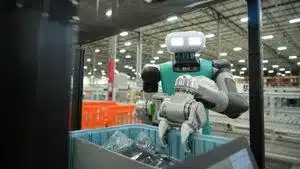

Toyota Canada Integrates Humanoid Robots
Toyota Canada partners with U.S.-based Agility Robotics to deploy humanoid robots named ‘Digit’ at its Woodstock assembly plant. These robots support manufacturing, supply chain, and logistics operations.
Digit, already in use by companies like Amazon, GXO, and Schaeffler, handles repetitive tasks following a year-long pilot with three units. The deal expands to seven robots, though its financial terms remain undisclosed.
Robot Functions and Capabilities
Agility spokesperson Tim Smith explains that Digit feeds totes of automotive parts to the assembly line. It loads and unloads an automated tugger, removing empty totes and placing full ones back on.
Standing five feet nine inches tall, the robots bend, walk, lift, and move objects. They focus on tasks like shifting totes between racks, which do not directly involve vehicle assembly.
Toyota Canada operates two additional plants in Cambridge that will not receive these robots.
Commitment to Workforce Stability
Toyota spokesperson Michael Bouliane emphasizes that the robots do not replace workers. “Toyota Motor Manufacturing Canada employs 8,500 highly skilled Canadians and has never laid off a full-time employee in its history,” he states.
The company has incorporated automation for 40 years, including over 500 automated delivery robots for internal logistics. This approach has boosted employment, positioning Toyota as Canada’s largest automotive manufacturer.
Future assessments will explore how robots and AI enhance production safety. By automating physically demanding tasks, employees shift to higher-value work. AI enables Digit to learn and adapt to new workflows continually.
Agility Robotics aims to build robot partners that augment the human workforce, allowing people to focus on more human-centric roles.
Industry Context and Expert Insights
Brendan Sweeney, managing director of the Trillium Network for Advanced Manufacturing, notes that assembly plants typically deploy thousands of robots. The automotive sector leads in robot adoption due to its repetitive processes, producing one vehicle per minute across thousands of steps.
Sweeney views the initiative as prioritizing employee health and safety. Robots handle undesirable jobs, freeing workers for mentally engaging tasks that are easier on the body.
Toyota’s non-unionized plants retain workers long-term. In contrast, unionized plants at General Motors, Ford, and Stellantis face challenges: General Motors plans 1,200 job cuts amid U.S. tariffs, while Stellantis pauses operations at its Brampton facility. Workers there belong to Unifor.
A recent Trillium Network report highlights declining unionization in Canadian plants to 33%, driven by growth in Japan-based automakers and reduced U.S.-based employment.

