





Planning a trip to Antarctica? The first thing you need to do is decide on how you want to get there.
The vast majority of people who travel to the White Continent reach it on a cruise vessel that departs from South America. Such trips typically start with a two-day crossing of the notoriously rough Drake Passage — the waterway between South America and Antarctica — followed by five or more days of exploring the coast of the continent and then a return trip across the Drake.
But there’s a second, less common way to go.
A handful of tour companies operate so-called “fly-cruise” trips to Antarctica that use hardy airplanes to fly tourists directly to the continent — no sailing across the Drake required.
On such trips, travelers still explore the coast of Antarctica by cruise vessel. But they don’t board the vessel that will take them exploring until after they land on the continent.
Related: What it’s like flying to Antarctica on a chartered plane
As I saw during a test of one of the fly-cruise trips a few years ago, it’s a very different experience from the traditional sail-across-the-Drake trip to Antarctica (which I have done quite a few times on a range of vessels — yeah, I’m a little obsessed with Antarctica).
So, which is the better way to go?
The short answer: There is no short answer. There are pros and cons to both, and the type of Antarctica trip that is right for you may not be the same as the type of Antarctica trip that is right for your neighbor. It will depend on several factors, including your tolerance for rough seas, the time you have to travel and your budget.
Reward your inbox with the TPG Daily newsletter
Join over 700,000 readers for breaking news, in-depth guides and exclusive deals from TPG’s experts
Here, a look at some of the advantages and disadvantages of the two major ways to get to Antarctica.
The all-cruise option
As noted above, most travelers to Antarctica reach the continent on a cruise vessel departing from South America — usually from Ushuaia, Argentina, or Punta Arenas, Chile, both located at the very southern tip of South America. A few cruise vessels also sail to Antarctica from Australia and New Zealand, though this is less common.
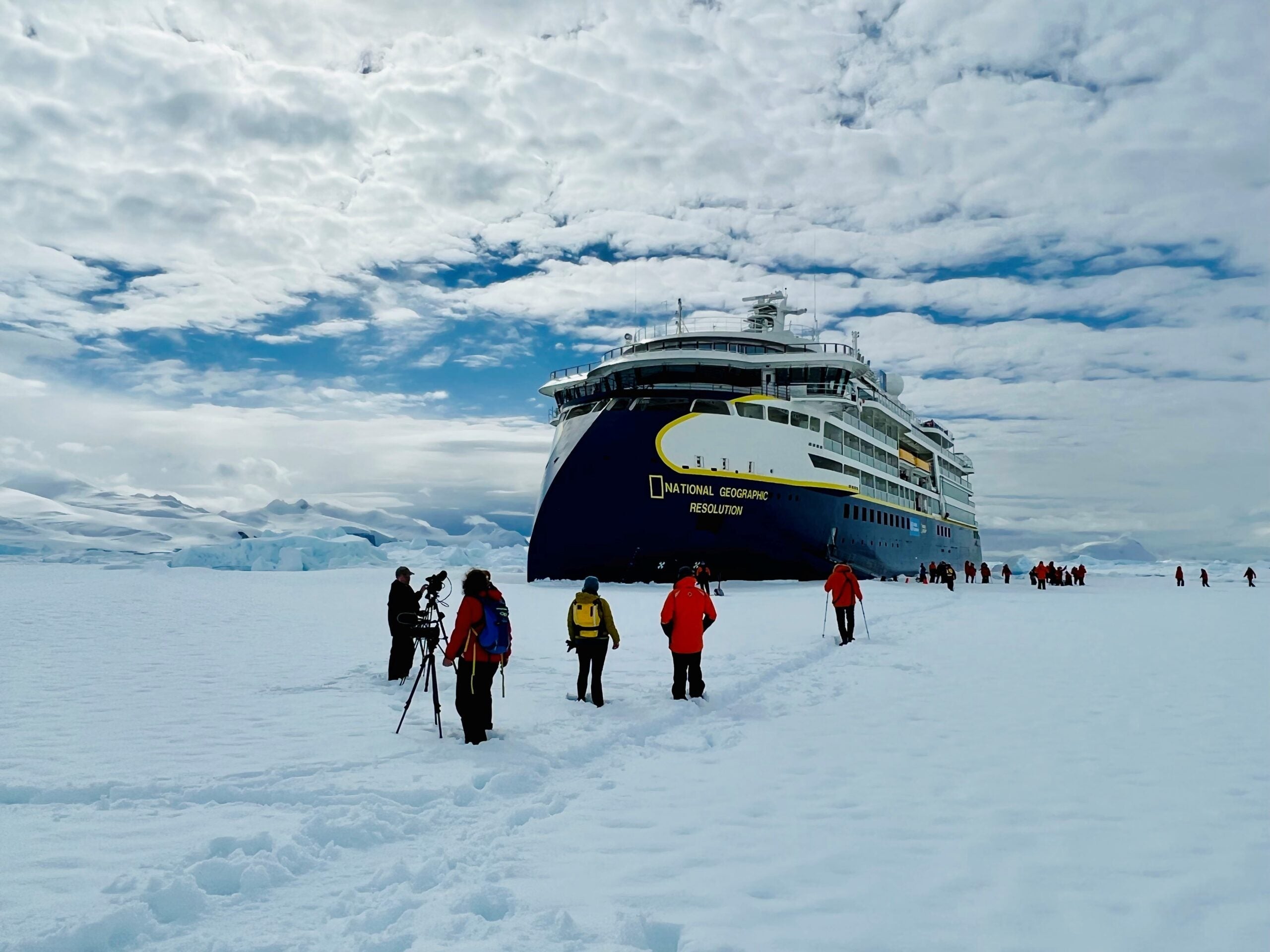
In most cases, such vessels are expedition cruise ships — small, hardy vessels with their own landing craft specifically designed to travel to remote, hard-to-reach places.
Related: The best expedition ships that go to Antarctica
The voyages are usually operated by small companies specifically known for expedition cruising, including Lindblad Expeditions, HX Expeditions, Quark Expeditions and Oceanwide Expeditions. But quite a few more-traditional cruise lines — including Silversea Cruises, Viking and Hapag-Lloyd Cruises — also operate expedition ships specifically built for travel to Antarctica and other polar regions.
Advantages of an all-cruise trip
The biggest advantage of an all-cruise trip to Antarctica is also, for some, its biggest disadvantage (more on this in a moment): It gets you into the Drake Passage.
As mentioned above, the Drake is notoriously choppy. Indeed, it’s known as one of the roughest waterways in the world. It’s not uncommon to encounter waves of 10 or 15 feet during a Drake crossing — and, as I’ve experienced myself, the waves can be much higher.
That may sound like nothing but a disadvantage. But to many travelers — including me — crossing to Antarctica in such seas is an integral part of the experience of a trip there. It’s part of understanding the remarkable history of Antarctic exploration, offering a taste of what great Antarctic explorers such as Ernest Shackleton and Roald Amundsen endured in their epic journeys to the continent a century ago. It’s also part of understanding the true remoteness of Antarctica, as the journey covers such a massive stretch of ocean.
Related: These 8 books are must-reads before an Antarctica trip
Bird-loving travelers who cross the Drake Passage by ship have the opportunity to see such remarkable bird species as the giant albatross, which you normally won’t find in Antarctica.
In addition, the two days of crossing the Drake Passage at the start of an all-cruise Antarctica trip give your guide a chance to prepare you for what you’re about to see. Typically, specialists in such topics as Antarctica wildlife, geology and history will hold introductory lectures during the crossing to help you put things in context upon arrival.
If nothing else, the two days provide a much-needed period of transition for travelers who have just left the frantic, crowded, modern world and soon will be thrust into a land of utter emptiness and wonder.
For some, braving a possibly rough trip across the Drake Passage is also a rite of passage. If you’ve gotten to Antarctica by ship across the Drake Passage, you’ve earned it.
Disadvantages of an all-cruise trip
As noted above, the biggest disadvantage of an all-cruise trip to Antarctica is the very same thing that some see as its biggest advantage: It gets you into the Drake — not just once, but twice.
Some people, including me, love cruising in big waves. It can be thrilling to experience the power of the ocean in all its force. But even those of us who love big waves have our limits. For someone who is prone to seasickness even in relatively calm seas, a transit through the Drake Passage can be a downright miserable experience.
Note that contrary to what you may hear, the Drake Passage isn’t always fraught. While waves up to 25 or even 35 feet high at times are not uncommon (something known as the Drake Shake), it can also be almost perfectly calm, a phenomenon known as the Drake Lake.
I experienced these calm conditions myself during an outbound crossing to Antarctica on a Lindblad Expeditions trip in 2022. On the way back, in contrast, we hit nearly 20-foot-high seas.
The ‘fly-cruise’ option
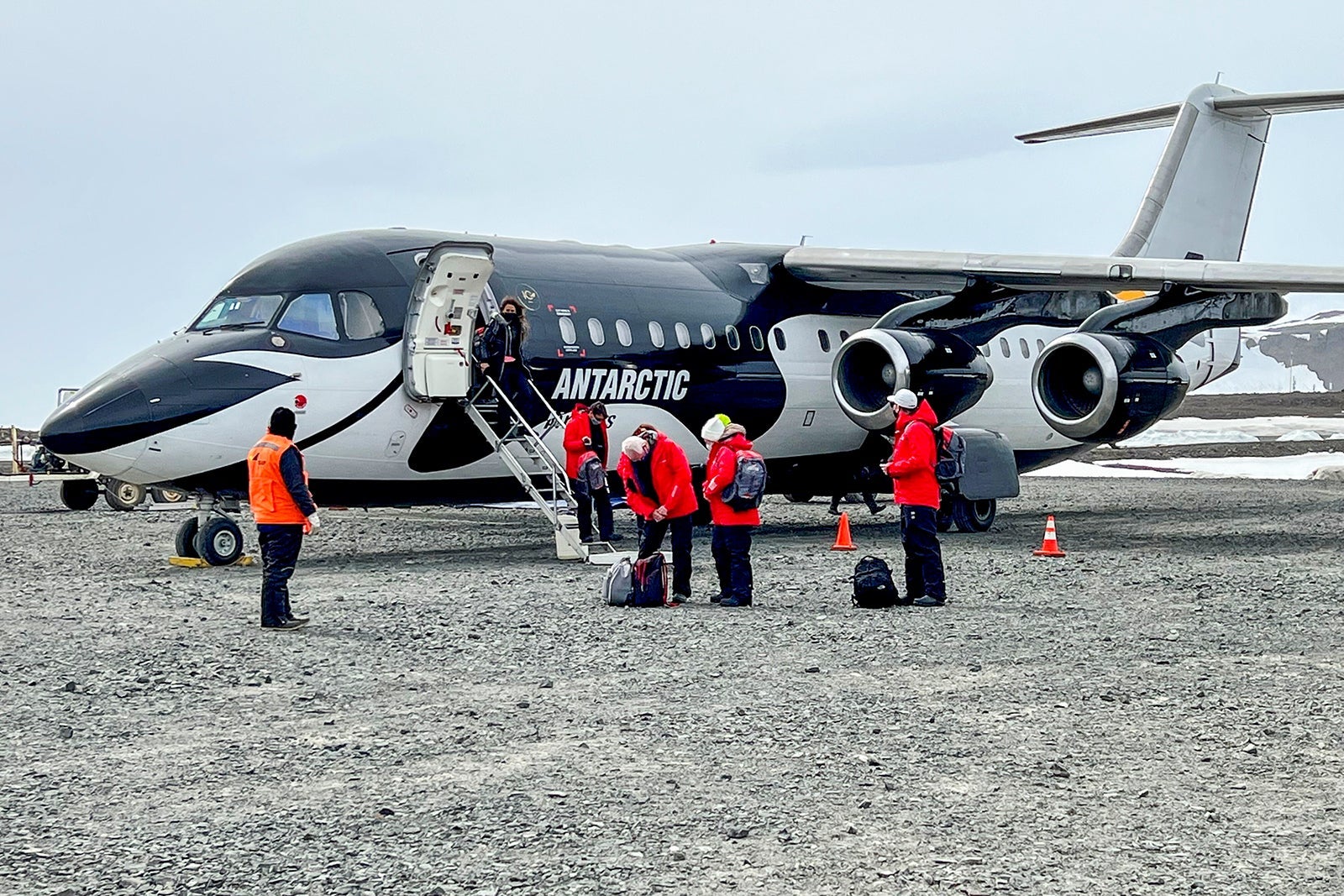
Fly-cruise tours to Antarctica typically start with a two-hour flight from Punta Arenas, Chile, to a Chilean research base on Antarctica’s King George Island, thus skipping a ship crossing of the Drake Passage. Base Presidente Eduardo Frei Montalva, as it’s known, has a gravel runway just long enough to handle some relatively small, hardy jets.
After landing at King George Island, passengers on fly-cruise trips walk to a nearby bay for a Zodiac boat transfer to an awaiting expedition cruise vessel. From there, they are quickly off on a five- or six-night exploration of the nearby Antarctic Peninsula and its environs.
At the end of the exploration, they fly back to Punta Arenas from the same base on King George Island at which they arrived.
The number of tour companies offering such trips is much more limited (though it includes Silversea Cruises, Lindblad Expeditions, Antarctica 21 and Quark Expeditions). About 90% of travelers to Antarctica still arrive by ship.
Advantages of a fly-cruise trip
There are two big advantages to a fly-cruise trip to Antarctica. First, you get to skip the Drake Passage, which, as noted above, can be a very big deal for those prone to seasickness. For people who are particularly sensitive to motion, flying there really is the only viable option for a trip to Antarctica, unless you want to risk being miserable for up to four days (you’ll have to cross the Drake twice on an all-cruise trip).
For the record, these post-flight sailings don’t entirely remove the possibility of experiencing rough seas. After leaving King George Island, expedition ships must cross the 60-mile-wide Bransfield Strait — another notoriously choppy body of water — to reach the Antarctic Peninsula. This is something I saw firsthand on the first night of my fly-cruise trip with Silversea in 2022; we hit waves around 10 feet high in the strait, leaving many passengers feeling queasy or worse.
Related: I just spent the night in an ‘igloo’ in Antarctica — here’s how you can, too
But the good news is that the Bransfield Strait crossing is relatively quick. We entered it in the evening and were through it by the time we woke up the next day. Once at the Antarctic Peninsula, the seas are relatively calm.
The second big advantage of fly-cruise trips to Antarctica is that they are shorter than what is typical for an Antarctica trip — something that should appeal to would-be Antarctica visitors who are limited in the number of days they can get away from work.
Antarctica trips that include ship crossings of the Drake Passage usually are at least 10 nights in length, not including the time it takes to get to and from the southern tip of South America. By cutting out the days crossing the Drake Passage, fly-cruise tour operators are able to offer an equal amount of time exploring Antarctica on a trip lasting just eight nights, including two nights in a Punta Arenas hotel — one before the flight to Antarctica and one afterward.
Disadvantages of a fly-cruise trip
The big knock on fly-cruise sailings to Antarctica is the risk that poor weather at the landing site at King George Island can delay flights to and from the island. Landings on the rough airstrip at the Chilean base require pilots to have a visual sighting of the runway.
Some companies, such as Silversea, take this into account when planning itineraries. To allow for delays caused by shifting weather, Silversea has built a wide “weather window” for the charter flights to and from Antarctica into its schedule. Silversea’s trips currently begin and end with a night at a hotel in Punta Arenas, with downtime there built into the itinerary to create wiggle room for flight timing.
Related: I just went kayaking in Antarctica — it was the most calm I’ve felt all year
If the weather is right, the flights to Antarctica will take place the morning after passengers arrive in Punta Arenas. But they can also shift earlier or later if the weather isn’t cooperating. The flights back to Punta Arenas from King George Island can be similarly adjusted.
In addition, Silversea books extra nights at the hotel it uses in Punta Arenas at its own expense, just in case flights are significantly delayed and passengers have to spend an extra night in Punta Arenas on the way in or out — though such occurrences are rare.
I saw this weather-window strategy in action myself during my fly-cruise trip to Antarctica in 2022. The day before we were supposed to fly back from King George Island, a large storm front moved into the area with low-lying clouds and fierce winds. The storm not only made it difficult for the charter planes that were supposed to take us back to Chile to land on the island, but also made it difficult to operate the Zodiac boats that would shuttle us from the ship to shore.
As per the plan, we arrived back at the bay early and waited for a break in the weather that would allow our flights home to take place. Such a window finally appeared in the late evening of the last day of the trip. We took off for Chile at around 11 p.m. — about nine hours later than we would have if the weather had been ideal.
Another possible downside to fly-cruise trips to Antarctica is that they are typically more expensive on a per-day basis than all-cruise trips.
Related: The ultimate Antarctica packing guide
At Silversea, which offers both types of Antarctica trips, fly-cruise itineraries start at $14,880 per person for six nights on a vessel — nearly $2,500 per night of sailing.
Fares for Silversea’s traditional Antarctica sailings that involve a crossing of the Drake Passage start at $14,760 per person for 10 nights on a vessel, about 40% less on a per-night-of-sailing basis.
Note that for Silversea’s fly-cruise option, the fares include the charter flights between South America and Antarctica, as well as the pre- and post-flight overnight hotel stays in Punta Arenas.
Starting next season, Silversea plans to shift the overnight hotel stays portion of the program from Punta Arenas to Puerto Williams, Chile, where it is building its own hotel — The Cormorant at 55 South — specifically for this purpose.
Bottom line
There’s no right answer to the question of how to get to Antarctica, whether by ship or plane. I know which way I lean. I prefer to go by ship, as I relish the experience of following in the footsteps of the great explorers in crossing the sometimes rough Drake Passage. But other travelers might find the fly-cruise option a better choice, whether because they are prone to seasickness even in moderate seas or just can’t take all that many days off for travel.

