





Record-Breaking Warmth Engulfs Western Canada
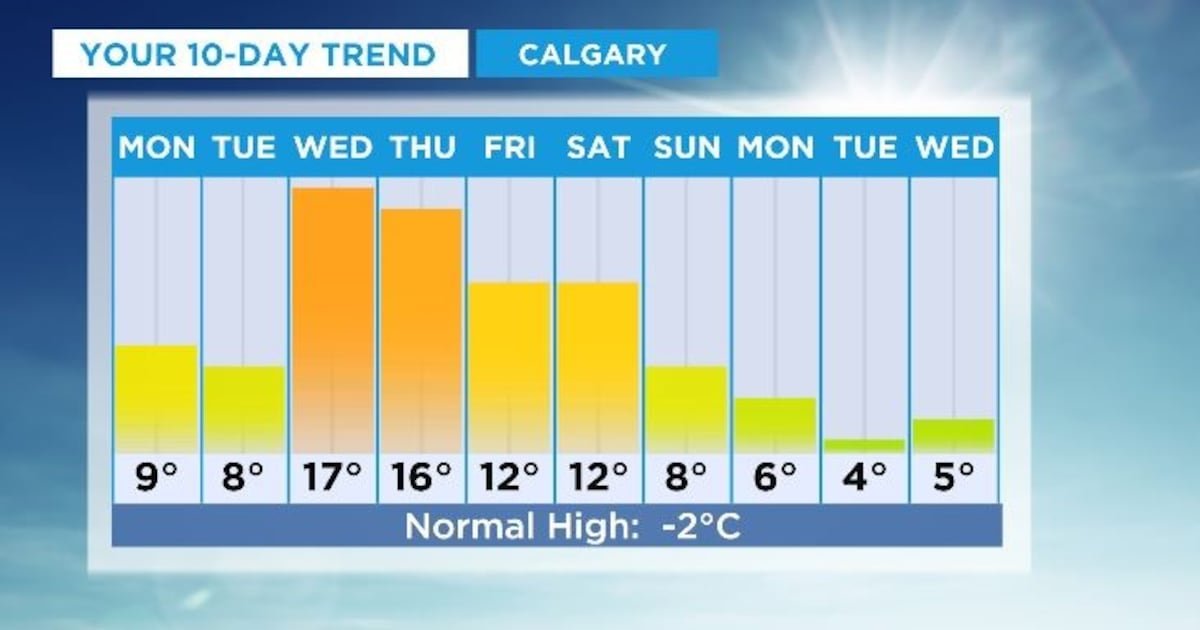
An intense weather pattern continues to deliver spring-like conditions across southern Alberta, with temperatures forecast to reach up to 20 degrees Celsius above seasonal averages this week. Meteorologists confirm the unseasonable warmth will persist through early next week, with minimal overnight freezing expected in most areas.
Temperature Extremes Defy Winter Norms
Calgary residents will experience one of the region’s most significant temperature anomalies on Wednesday when daytime highs are projected to reach 17°C – accompanied by overnight lows of 6°C. This represents a dramatic departure from the typical February average lows of -14°C for the region. Even Monday’s comparatively cooler forecast of 9°C significantly exceeds the normal seasonal high of -2°C.
Weather Systems Driving the Anomaly
The abnormal conditions stem from a persistent high-pressure ridge anchored over western Canada, compounded by a sinking polar vortex affecting eastern regions. Westerly winds across southern Alberta will intensify through the week, with Calgary experiencing sustained winds near 20 km/h and gusts approaching 40 km/h on Monday.
Historical Context and Environmental Impact
This warm spell follows an exceptionally mild January that ranked among the warmest in recorded history. Recent climate data shows last month’s average temperature settled at -3.4°C, marking the 17th warmest January since record-keeping began. The warmest January ever recorded occurred in 1919 with an average temperature of -0.6°C.
Ground conditions reveal minimal snow coverage across central and southern Alberta, with rapid melting continuing in remaining snowpack areas. Forecast models suggest temperatures will moderate slightly by mid-next week but are expected to remain above seasonal averages through the immediate forecast period.
Regional Temperature Contrasts
While western regions experience this warming trend, eastern Canada and portions of the northern United States face opposing conditions under the polar vortex’s influence. This weather dipole creates simultaneous temperature extremes across the continent, with western areas seeing unusual warmth as eastern regions deal with colder-than-average conditions.

