




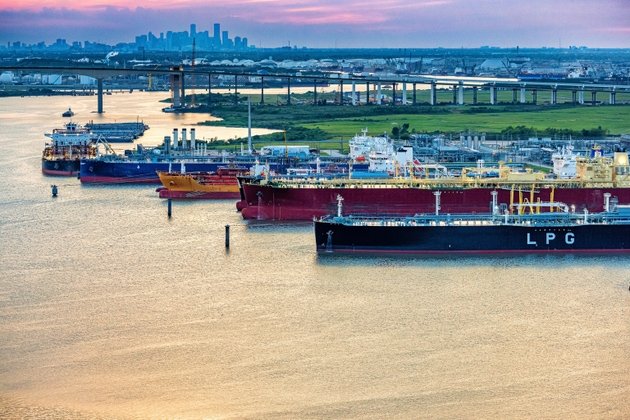

European refiners are increasingly turning to U.S. crude oil, driving the prominence of NYMEX WTI in global markets. The addition of WTI Midland to the Brent basket underscores this shift, as North American production has surged from 8 million barrels per day in 2008 to approximately 19 million barrels per day in 2025.
The Growing Global Role of NYMEX WTI
Since Russia’s invasion of Ukraine in 2022, European refiners have diversified away from Russian supplies, purchasing record volumes of North American crudes. The United States has emerged as a key supplier, with exports facilitated by infrastructure expansions following the 2015 lifting of a 40-year export ban.
The integration of WTI Midland into the Brent basket in 2023 has directly connected Brent and WTI prices, enhancing liquidity in NYMEX WTI futures. This linkage has spurred trading during European hours and strengthened WTI’s influence worldwide.
U.S. crude prices now play a pivotal role in the global oil landscape. The WTI-Brent spread, which tracks the price differential, has narrowed from a low of $25 per barrel to around -$4 per barrel below Brent by late 2025, aided by robust U.S. export capabilities.
Trading in WTI-Brent futures spreads, used for hedging international U.S. crude flows, averages 61,000 contracts daily through December 2025—a fivefold rise from 2024, according to CME Group data.
Challenges in North Sea Production and U.S. Export Gains
Recent North Sea discoveries like Johan Sverdrup and Johan Castberg have increased output, yet core Brent grades—Brent, Forties, Oseberg, Ekofisk, and Troll—have declined by about 100,000 barrels per day over the past year to December 2025.
In contrast, U.S. crude exports to northwest Europe have climbed to 1.1 million barrels per day, more than double the 550,000 barrels per day from North Sea terminals, per Vortexa analytics. This influx of light sweet U.S. grades allows European refiners to substitute for traditional Russian supplies, yielding higher diesel and gasoline outputs suited to regional needs.
These dynamics have bolstered NYMEX WTI futures and related benchmarks like Argus MEH, with traders highlighting WTI Midland’s quality as a key factor in its appeal.
European Trading Volumes Hit New Highs
CME Group data reveals a 16% year-over-year increase in NYMEX WTI futures traded during London hours in 2025, reaching 200,000 contracts per day. In three months, European session volumes exceeded 25% of total trading.
The Brent basket inclusion and export boom have also lifted volumes in WTI Midland and WTI Houston futures. Argus WTI Houston vs. NYMEX WTI (HTT) trading peaked in October 2025, tripling prior highs, reflecting heightened liquidity for managing regional risks.
Overall, WTI Houston and Midland differentials to NYMEX WTI averaged 18,000 contracts daily in 2025, up 14% from 2024, with open interest nearing a record 705,000 contracts by year-end. This positions WTI Midland as a vital swing barrel for northwest European refiners.
Record U.S. Production Fuels International Adoption
The shale boom has propelled U.S. output to 14 million barrels per day across key districts, with PADD III—including the Permian Basin—hitting a record 10.2 million barrels per day in Q4 2025, per U.S. Energy Information Administration figures.
Escalating exports to Europe and Asia have drawn more global traders to NYMEX WTI, solidifying its status as a benchmark. As refiners process greater U.S. volumes abroad, reliance on WTI for pricing cargoes continues to expand.

