




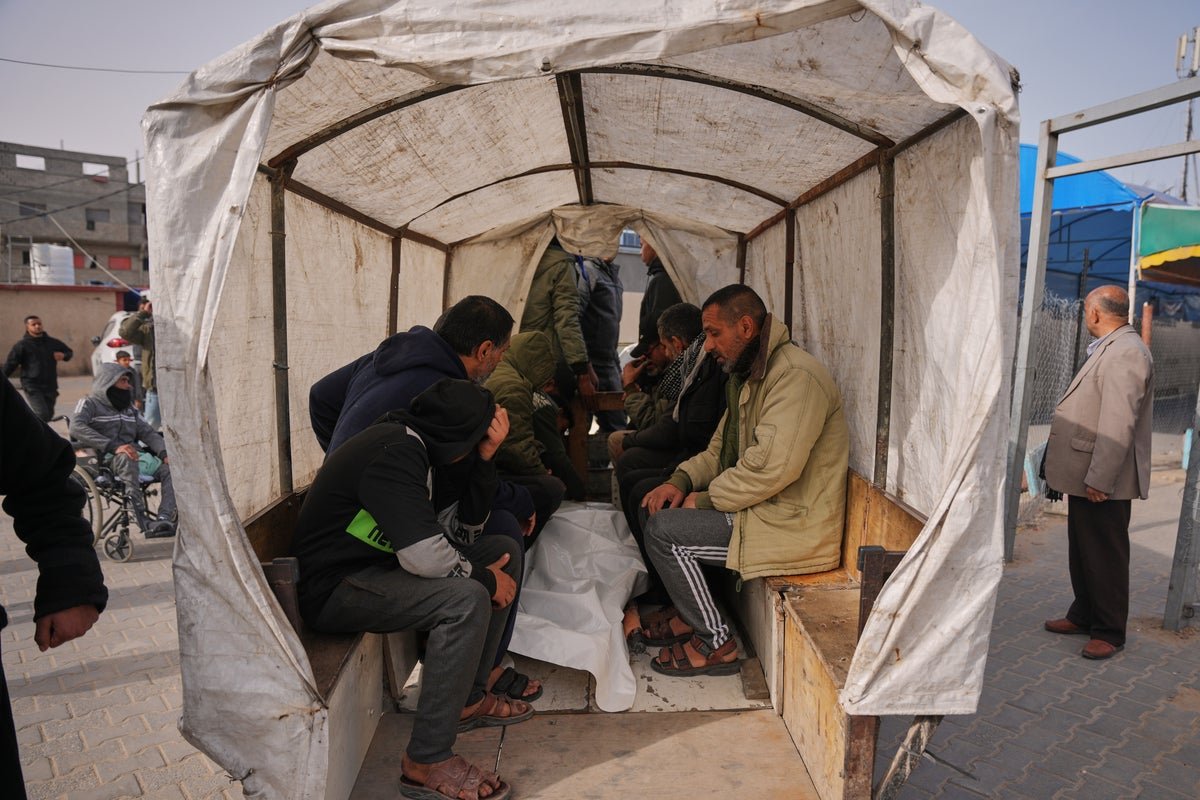

Israeli airstrikes targeted multiple sites in Gaza on Saturday, resulting in 27 deaths, including three children, as attacks hit a police station, residential buildings, and displacement tents. Palestinian health officials confirmed the casualties, noting strikes on areas housing civilians.
Targets and Military Justification
The Israeli military announced that the operations focused on commanders and facilities linked to Hamas and Islamic Jihad militants. Officials described the actions as retaliation for a violation of the U.S.-brokered ceasefire established last October, following two years of intense conflict in the region.
Hamas, which governs nearly half of the Gaza Strip, accused Israel of breaking the truce first. The group offered no details on whether its members or installations sustained damage during the assault.
Timing and Broader Context
The strikes unfolded just one day before the planned reopening of the Rafah border crossing between Gaza and Egypt, part of a U.S.-supported initiative to resolve the ongoing war that has ravaged large swaths of the territory. The conflict ignited when Hamas-led gunmen assaulted southern Israel on October 7, 2023.
Israeli authorities have warned that fighting may resume if Hamas refuses to disarm, signaling persistent tensions despite the fragile peace agreement.
Details of the Attacks
Warplanes bombed the Sheikh Radwan police station west of Gaza City, where medics and local police reported ten officers and detainees killed. Rescue operations continued at the scene, with teams from the Hamas-administered police force searching for additional victims.
Additional strikes demolished at least two homes in northern-central Gaza City and a tent camp for displaced residents in southern Khan Younis, according to local authorities. Footage from Gaza City captured severe damage, including scorched walls in a multi-story apartment and rubble scattered across streets.
Samer al-Atbash, uncle to the three children who perished, expressed grief over the loss: “We found my three little nieces in the street. They say ‘ceasefire’ and all. What did those children do? What did we do?”
Incident Sparking the Response
The Israeli military explained that the airstrikes followed an event on Friday, when troops spotted eight gunmen exiting a tunnel in Rafah, a southern Gaza zone under Israeli deployment per the truce. Forces eliminated three gunmen and captured a fourth, identified as a local Hamas commander. Hamas provided no response to the encounter.
Numerous Hamas fighters remain confined in Rafah’s tunnel network since the ceasefire began, with several reported killed in subsequent confrontations with Israeli troops.
Ceasefire Challenges and Future Steps
The agreement has faced repeated disruptions from violence. Palestinian health officials report over 500 deaths, mostly civilians, from Israeli fire since the truce, while Israeli sources confirm four soldiers killed by Palestinian militants.
Both parties continue to blame each other for breaches, even as U.S. efforts push for progress in subsequent ceasefire phases. These include Hamas disarmament—a condition the group firmly opposes—further Israeli pullback from Gaza, and the introduction of an international peacekeeping presence.
Hamas is pushing to incorporate its 10,000 police officers into a proposed U.S.-backed Palestinian governing body for Gaza, a proposal expected to encounter strong resistance from Israel.

